

Extra income is everywhere now. The harder part is making it matter.
In the Fed’s latest household survey, 13% of adults said they made money by selling things, and 9% said they earned money from short-term tasks like rides, delivery, or odd jobs. That tells you something important: extra income is common. It is not automatically wealth-building. In fact, the same Fed report says many people who did short-term task work wanted more consistent pay, which is exactly why side money needs a plan before it hits your checking account.
That plan matters because wealth usually comes from ownership, not hustle alone. In the Fed’s 2022 Survey of Consumer Finances, 54.3% of families held retirement accounts, direct stock ownership rose to 21%, and 20% owned a privately held business. Those are not random stats. They point to the same pattern: people build long-term wealth when extra cash gets converted into assets, tax advantages, and ownership stakes.
So the real question is not, “How do I make another $300 this month?” It is, “Where should that $300 go so it changes my future?” Here are 10 moves that do exactly that.
Why extra income gets wasted so easily
Most extra income disappears for a boring reason: it arrives without instructions.
Regular paychecks usually already have a job. Rent, groceries, insurance, and utilities grab them fast. Side income feels different, so it often gets treated like bonus money. Then it leaks into eating out, impulse upgrades, and lifestyle creep. Meanwhile, only 55% of adults said in 2024 that they had enough rainy-day savings to cover three months of expenses, and 30% said they could not cover three months of expenses by any means. That is why “I’ll save what’s left” is usually a losing strategy.
The fix is not motivation. It is routing. The Fed also found that 85% of adults who always had money left over at the end of the month had three months of emergency savings, versus just 13% of those who never had money left over. In other words, extra income becomes powerful when you capture it on purpose.
1. Build a tax bucket before you spend anything
If your extra income comes from freelancing, gig work, reselling, consulting, or contract work, do not treat every dollar as spendable.
Instead, create a separate tax bucket the same day the money lands. For many side earners, that means immediately moving a chunk into a high-yield savings account reserved for taxes and business costs. The exact percentage depends on your situation, of course. Still, the principle is simple: money you may owe later is not wealth yet.
This move is boring, but it protects every other move on this list. Nothing kills a side-income plan faster than a surprise tax bill that forces you to sell investments or carry credit card debt.
2. Finish a starter emergency fund
Before you try to optimize everything, give your money plan a shock absorber.
The Fed says 55% of adults had rainy-day savings covering three months of expenses in 2024, while 63% said they would cover a $400 emergency entirely with cash or the equivalent. That gap matters. Small emergencies are one thing. A job interruption, car repair, or medical surprise is a different boss fight.
That is why extra income is perfect emergency-fund fuel. Use it to build at least a starter cushion first. Even one month of core expenses changes your decision-making. You stop raiding cards for surprises. You also stop treating every setback like a crisis.
3. Grab the full 401(k) match and raise your deferrals
This is still one of the best wealth moves in America.
For 2026, the IRS says the basic employee deferral limit for most 401(k), 403(b), government 457, and Thrift Savings Plan accounts is $24,500. The catch-up limit is $8,000 for most workers age 50 and older, and a higher catch-up of $11,250 applies for ages 60 to 63.
So if your day job offers a match and you are not getting the full thing, direct extra income toward freeing up room in your regular paycheck so you can capture that match. That is a clean upgrade. You are using side money to unlock employer money, tax advantages, and long-term compounding all at once.
4. Max a Roth IRA or traditional IRA
After the match, an IRA is one of the cleanest places for extra income to go.
For 2026, the IRS says you can contribute up to $7,500 across your traditional and Roth IRAs, or $8,600 if you are 50 or older.
This is a great use for side income because the amount is manageable. You do not need hedge-fund money to make progress here. An extra $150 a week gets you most of the way to the annual limit. Over time, that turns scattered side cash into a real retirement asset instead of a collection of forgettable purchases.
5. Use an HSA like a stealth wealth account
If you qualify for a health savings account, do not waste it.
The IRS says 2026 HSA contribution limits are $4,400 for self-only coverage and $8,750 for family coverage. It also says contributions can be deducted, earnings inside the account are tax-free, and distributions for qualified medical expenses can be tax-free. The account is portable too, which means it stays with you if you change employers.
That makes an HSA one of the best landing spots for extra income, especially if you can pay current medical costs out of pocket and let the account grow. In practice, it can function like a health account now and an extra retirement bucket later.
6. Kill high-interest debt before you chase fancy returns
This is the least glamorous move on the list. It is also one of the strongest.
If your extra income is going into index funds while expensive card debt keeps compounding in the background, your build has a leak. Paying off high-interest debt gives you a guaranteed return equal to the interest you no longer owe. That is not exciting dinner-party talk. It is excellent math.
Also, debt payoff creates optionality. Once the balance is gone, that same cash flow can be redirected into investing every month. In other words, debt payoff is not the enemy of wealth building. For many people, it is the unlock.
7. Start a simple taxable investing plan
Once your emergency savings and tax-advantaged accounts are moving, give your extra income a long runway.
A taxable brokerage account is where side income can become flexible long-term capital. You do not need to overcomplicate this. Broad low-cost index funds do the job for a lot of people. The point is not to feel brilliant. The point is to build another ownership lane outside retirement accounts.
That idea lines up with how wealth looks in real households. The Fed’s SCF shows retirement accounts are widely used, and direct stock ownership rose sharply from 15% of families in 2019 to 21% in 2022. Ownership is the pattern to copy.
8. If your extra income is 1099, open the right retirement plan
This is where many side hustlers leave a lot of money on the table.
For 2026, the IRS says total annual additions to a defined contribution plan can reach $72,000, or more with catch-up contributions in eligible plans. It also says SEP-IRA contributions can be up to the lesser of 25% of compensation or $72,000 in 2026.
That means self-employed income can do more than pay today’s bills. It can create serious retirement room if you use a Solo 401(k) or SEP-IRA correctly. The best part is strategic: you turn side income from “extra spending power” into “extra tax shelter.”
9. Reinvest part of your extra income into skills and tools
Not every dollar of extra income should go straight into market assets.
Some of it should go into raising your income ceiling. That might mean a certification, software, a better laptop, a portfolio site, professional licensing, coaching, or a course that improves your main earning power. The goal is not endless self-help spending. The goal is increasing the rate at which you can produce cash in the future.
This fits the broader labor picture too. In the Fed’s 2024 household survey, 14% of adults started a new job, and 62% of workers who changed jobs said the new one was better than the prior one. Better earning power gives every future dollar more leverage.
10. Turn one-off hustle into ownership
Hourly side work is useful. Ownership is better.
The Fed’s 2022 Survey of Consumer Finances says 20% of families owned a privately held business, the highest level on record in the modern survey, and those families had higher income and wealth than those that did not. Nearly half of families in the top income decile owned a business.
That does not mean you need to launch the next unicorn. It means you should look for ways to turn effort into something more durable than a one-time payout. For example, a freelance service can become a small agency. A resale hobby can become repeat inventory sourcing. A skill can become a template library, course, or niche business. Wealth gets stronger when income is not tied one-for-one to every hour you work.
Read more posts from Nerd XP
Stay up-to-date on the latest news in the world of finance, geek culture, and skills.
- Central Banks Are Spelling Out a Multi-Asset Risk Map
 Most investors still talk about risk one shelf at a time. Stocks are risky. Bonds are defensive. Credit is someone else’s problem. Central banks are telling a different story now. Their latest warnings read less like isolated market commentary and… Leia mais: Central Banks Are Spelling Out a Multi-Asset Risk Map
 - Xbox and Gears Still Have Real Momentum
 For all the talk that Xbox has become too scattered, too platform-agnostic, or too far removed from the old console-war script, today tells a different story. Microsoft just announced that its June 7 Xbox Games Showcase will be followed immediately… Leia mais: Xbox and Gears Still Have Real Momentum
 - TikTok Wants to Be a Lender, Not Just a Platform
 For years, the TikTok story was simple: attention first, ads second, shopping maybe third. That model is changing fast. Reuters reported on March 31 that TikTok is seeking approval from Brazil’s central bank for two licenses that would let it… Leia mais: TikTok Wants to Be a Lender, Not Just a Platform
 - Portfolio Careers Beat the Side-Hustle Fantasy
 For years, people were sold a very specific dream. Start a side hustle. Work nights for a while. Then escape your job, replace your income, and finally control your life. That dream still sounds good. However, real life keeps exposing… Leia mais: Portfolio Careers Beat the Side-Hustle Fantasy
 - Why McCormick and Unilever Put Flavor on Wall Street
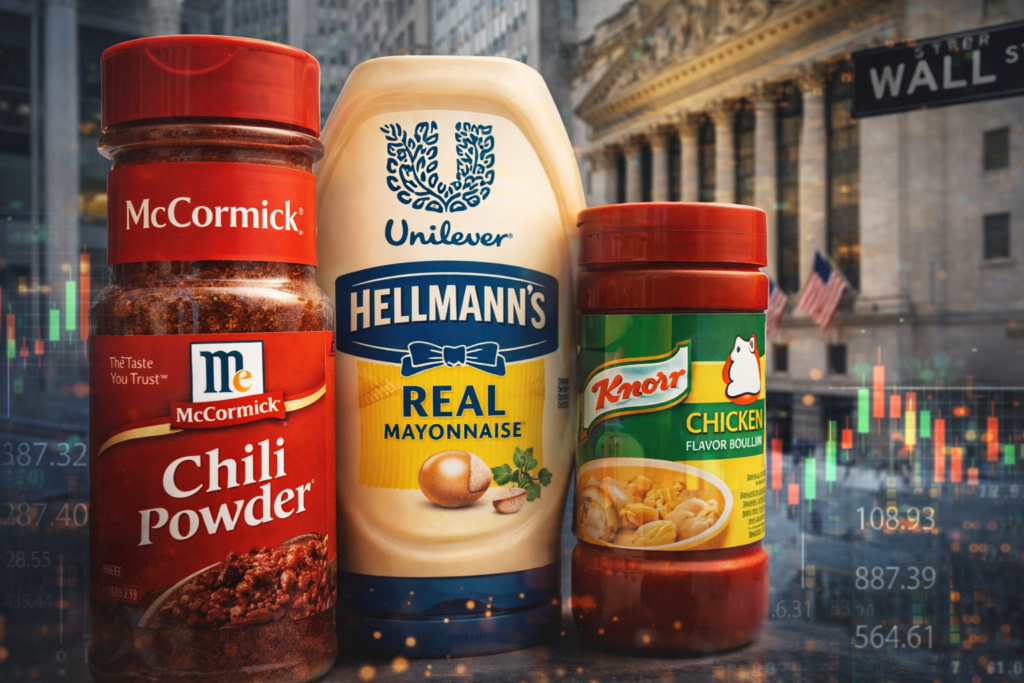 A spice rack is not supposed to feel like a market-moving asset. Yet on March 31, 2026, McCormick and Unilever made flavor a real Wall Street conversation. Their deal to combine Unilever’s foods business with McCormick was valued at about… Leia mais: Why McCormick and Unilever Put Flavor on Wall Street
 - Private Credit Stress Is Getting Visible
 For a long time, private credit’s biggest danger was that you could not see it clearly. That was the trade. Investors got higher yields, smoother marks, and less daily market noise. In return, they accepted opaque portfolios, illiquid structures, and… Leia mais: Private Credit Stress Is Getting Visible
A simple way to route extra income
If you need a starter system, keep it simple.
Every time extra income hits, split it on purpose. One workable version is this: first fund your tax bucket if needed, then send money to your emergency fund or debt, then your retirement accounts, then long-term investing, and finally skill upgrades or business reinvestment. You do not need a perfect ratio on day one. You need a repeatable one.
That is the real secret. Extra income builds wealth when it stops behaving like random money.
The bottom line
Most people think extra income builds wealth by itself. It does not.
What builds wealth is the conversion. Side cash becomes powerful when it turns into emergency savings, tax-advantaged retirement dollars, HSA assets, lower debt, brokerage investments, stronger earning power, and eventually ownership. That is also what the data keeps pointing toward: households build wealth through assets and business equity, not through hustle alone.
So do not ask whether your extra income is big enough. Ask whether it has a job.
That is the move that turns a side quest into a real upgrade path.