

For years, betting on U.S. stocks felt like the easiest answer on the board.
You bought the S&P 500, let Big Tech do its thing, and usually looked smart. That playbook worked so well for so long that many investors stopped asking a basic question: what happens when the winners get crowded, expensive, and more sensitive to bad news?
That question matters now because money is clearly rotating. Reuters reported in February that U.S.-domiciled investors had pulled about $75 billion from U.S. equity products over the prior six months, including $52 billion since the start of 2026, the fastest early-year withdrawal pace in at least 16 years by LSEG Lipper’s data. More recently, U.S. equity funds lost another $21.92 billion in the week ended March 4 and $7.77 billion in the week ended March 11. At the same time, ICI’s March 18 data showed domestic equity funds still posting outflows while world equity funds attracted inflows.
That does not mean investors suddenly hate stocks. It means the old “buy America and forget it” trade is being questioned. In practice, money is rotating out of some U.S. stock funds and into overseas equity funds, bonds, cash, value strategies, and a few inflation-resistant sectors. The move is less like a panic exit and more like a portfolio rebalance after one strategy dominated for too long.
U.S. stocks stopped feeling like the only obvious choice
The first reason is simple: U.S. equities got expensive, concentrated, and harder to justify at the margin.
Reuters reported on February 5 that investors were shifting toward ex-U.S. equity funds because high-valuation U.S. tech stocks looked less attractive than more diversified, lower-valued markets abroad. It also said ex-U.S. equity funds pulled in $15.4 billion in January, the biggest inflow in four and a half years, while U.S.-focused equity funds attracted only $5.7 billion, the weakest in three months. A week later, Reuters said Europe and Asia drew strong inflows as investors trimmed exposure to U.S. mega-cap stocks over concerns about stretched valuations and rising AI-related spending.
That shift makes sense. When one market leads for years, it eventually starts carrying the burden of very high expectations. U.S. large-cap indexes still have enormous quality and earnings power. However, they also carry more concentration risk than many investors fully appreciate because so much performance has been driven by a narrow group of giant technology names. Once investors start worrying that AI spending is getting too heavy or that future returns may not match the hype, even a small sentiment change can send money looking elsewhere.
Read more posts from Nerd XP
Stay up-to-date on the latest news in the world of finance, geek culture, and skills.
- Central Banks Are Spelling Out a Multi-Asset Risk Map
 Most investors still talk about risk one shelf at a time. Stocks are risky. Bonds are defensive. Credit is someone else’s problem. Central banks are telling a different story now. Their latest warnings read less like isolated market commentary and… Leia mais: Central Banks Are Spelling Out a Multi-Asset Risk Map
 - Xbox and Gears Still Have Real Momentum
 For all the talk that Xbox has become too scattered, too platform-agnostic, or too far removed from the old console-war script, today tells a different story. Microsoft just announced that its June 7 Xbox Games Showcase will be followed immediately… Leia mais: Xbox and Gears Still Have Real Momentum
 - TikTok Wants to Be a Lender, Not Just a Platform
 For years, the TikTok story was simple: attention first, ads second, shopping maybe third. That model is changing fast. Reuters reported on March 31 that TikTok is seeking approval from Brazil’s central bank for two licenses that would let it… Leia mais: TikTok Wants to Be a Lender, Not Just a Platform
 - Portfolio Careers Beat the Side-Hustle Fantasy
 For years, people were sold a very specific dream. Start a side hustle. Work nights for a while. Then escape your job, replace your income, and finally control your life. That dream still sounds good. However, real life keeps exposing… Leia mais: Portfolio Careers Beat the Side-Hustle Fantasy
 - Why McCormick and Unilever Put Flavor on Wall Street
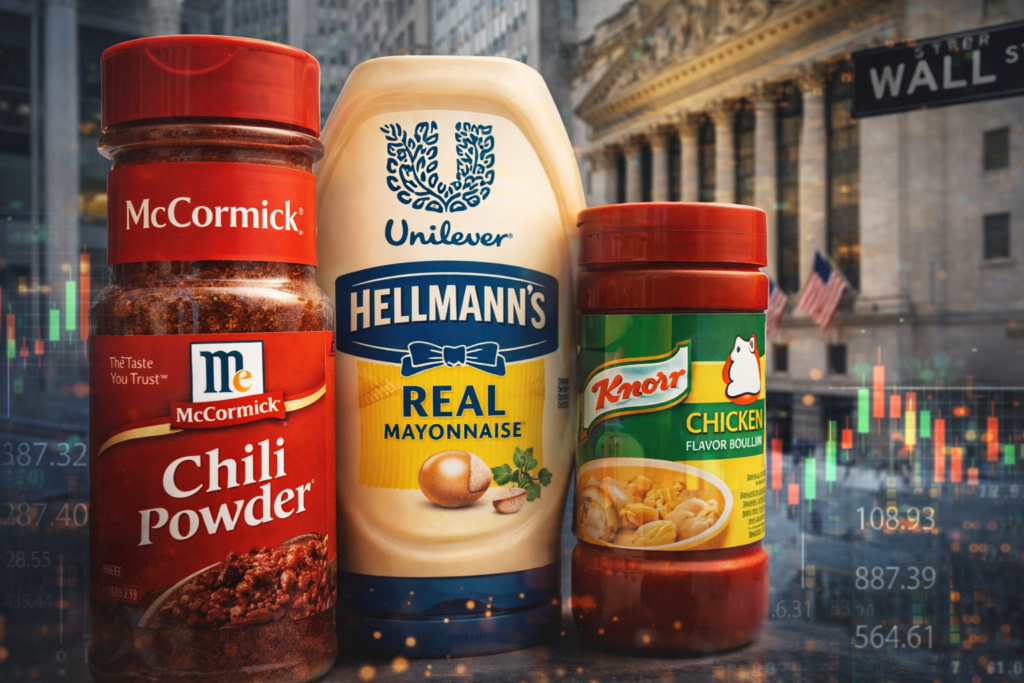 A spice rack is not supposed to feel like a market-moving asset. Yet on March 31, 2026, McCormick and Unilever made flavor a real Wall Street conversation. Their deal to combine Unilever’s foods business with McCormick was valued at about… Leia mais: Why McCormick and Unilever Put Flavor on Wall Street
 - Private Credit Stress Is Getting Visible
 For a long time, private credit’s biggest danger was that you could not see it clearly. That was the trade. Investors got higher yields, smoother marks, and less daily market noise. In return, they accepted opaque portfolios, illiquid structures, and… Leia mais: Private Credit Stress Is Getting Visible
Overseas markets finally started looking worth the trip
This is the part many U.S. investors miss.
Money does not rotate out of one market just because that market has problems. It usually rotates because something else starts looking more attractive. Reuters said Bank of America’s February fund manager survey showed investors switched from U.S. equities to emerging market equities at the fastest rate in five years. The same Reuters report said U.S. wealth clients were increasingly talking about investing offshore after seeing how foreign markets performed in dollar terms. UBS also highlighted catalysts outside the U.S., including China’s growth and yield appeal, Japan’s possible political upside, and Europe’s support from defense and fiscal spending.
You can already see that in the flow numbers. In ICI’s combined weekly data for March 11, domestic equity funds had estimated outflows of $1.34 billion while world equity funds had estimated inflows of $6.78 billion. The prior week looked similar: domestic funds lost $11.47 billion while world funds gained $2.51 billion. That is not random noise. That is rotation.
In other words, investors are not only saying, “The U.S. looks expensive.” They are also saying, “Europe, Asia, and emerging markets may offer better odds from here.” That is a very different mindset from the one that dominated the last decade.
The macro backdrop in the U.S. got messier
The second major driver is macro risk.
In early March, Reuters said U.S. equity funds suffered their biggest outflows in eight weeks as investors cut risk exposure over the U.S.-Israeli conflict with Iran and its implications for inflation and interest rates. A week later, those outflows extended as attacks on energy infrastructure and tankers pushed up oil and raised stagflation fears. Reuters also reported that markets sharply pushed back Fed rate-cut expectations after February producer inflation came in hot and oil and shipping costs rose. Meanwhile, the Fed’s January statement showed the central bank still holding the federal funds target range at 3.5% to 3.75% and stressing that it would keep assessing incoming data and risks.
That matters because U.S. stocks, especially growth-heavy funds, tend to struggle when investors think inflation could stay sticky and rate cuts may arrive later than hoped. A market built on long-duration growth stories is more sensitive to discount-rate anxiety than a cheaper market with more banks, industrials, commodity firms, and dividend payers.
The inflation picture also has not fully calmed down. The Bureau of Labor Statistics said February CPI was still up 2.4% year over year, with core CPI at 2.5%. That is much better than the worst stretch of the inflation cycle. Still, it is not the clean all-clear that would make investors comfortable paying any price for U.S. growth stocks.
Investors are rotating inside the market too
This is not just a U.S.-versus-foreign story. It is also a growth-versus-value story.
Reuters said U.S. growth funds lost $11.15 billion in the week ended March 4, then another $4.48 billion in the week ended March 11. Value funds, by contrast, kept attracting money. Sector flows told a similar story. Investors bought industrials, utilities, and metals-and-mining funds in early March, and Reuters reported today that global energy-sector funds have already attracted $2.1 billion so far this month as oil prices surged.
That is a big clue. Investors are not just abandoning risk at random. They are favoring parts of the market that look cheaper, more defensive, or more likely to benefit from the current backdrop. When oil jumps, inflation fears rise, and central banks look stuck, energy and value can look more appealing than richly valued growth funds. It is a classic market rotation, not a mysterious one.
Some of the money is not going to stocks at all
Another reason U.S. stock funds are bleeding is that plenty of money is rotating into safer parking spots instead.
Reuters said U.S. money market funds drew $22.51 billion in the week ended March 4, then another $1.5 billion in the week ended March 11. Bond funds also kept attracting cash, extending their buying streak to nine and then ten straight weeks. ICI’s March 18 combined data likewise showed $15.62 billion of bond-fund inflows in the latest week, versus equity inflows that were driven entirely by world funds while domestic equity remained negative.
That is important because it changes how you should read the headline. “Money is leaving U.S. stock funds” can sound like an anti-America call. Often it is just a risk-budget call. Investors are deciding that after a long run in U.S. equities, they would rather own more bonds, more cash, more non-U.S. stocks, or more defensive sectors than keep piling into the same domestic growth-heavy funds.
This is a rotation, not necessarily a verdict
Here is the nuance that matters most.
Even with domestic equity outflows, total equity flows are not collapsing in a straight line. ICI’s combined data for the week ended March 11 showed overall equity inflows of $5.44 billion because world equity fund buying more than offset domestic outflows. That means investors are still willing to own stocks. They are just becoming more selective about where and how they do it.
That distinction is useful for everyday investors. If you are reading the headlines and thinking, “Should I dump my S&P 500 fund?” the better lesson is usually not to make a dramatic all-or-nothing move. The smarter takeaway is that concentration, valuation, and macro sensitivity matter more than they did when everything in U.S. large-cap growth felt unstoppable.
What regular investors should do now
First, do not confuse rotation with collapse.
The U.S. market still has world-class companies, deep liquidity, and powerful long-term earnings engines. None of that disappeared. What changed is that investors are no longer willing to pay up automatically for the same narrow set of winners while ignoring cheaper opportunities abroad or safer places to park cash.
Next, check your own concentration. Many investors think they are diversified because they own an S&P 500 fund. In reality, they may be heavily tied to a handful of mega-cap growth names and the same macro assumptions that drove the last cycle. If your portfolio rises and falls mainly with Big Tech sentiment, you may be more exposed than you think.
Then, think in buckets. A sensible portfolio can still keep a strong U.S. core while adding some international exposure, some bonds, and a bit more balance between growth and value. That is not a retreat. It is portfolio maintenance.
Finally, remember what markets do after long winning streaks: they force people to relearn diversification. That is what this looks like.
Read more posts from Nerd XP
Stay up-to-date on the latest news in the world of finance, geek culture, and skills.
- Central Banks Are Spelling Out a Multi-Asset Risk MapMost investors still talk about risk one shelf at a time. Stocks are risky. Bonds are defensive. Credit is someone else’s problem. Central banks are telling a different story now. Their latest warnings read less like isolated market commentary and… Leia mais: Central Banks Are Spelling Out a Multi-Asset Risk Map
- Xbox and Gears Still Have Real MomentumFor all the talk that Xbox has become too scattered, too platform-agnostic, or too far removed from the old console-war script, today tells a different story. Microsoft just announced that its June 7 Xbox Games Showcase will be followed immediately… Leia mais: Xbox and Gears Still Have Real Momentum
- TikTok Wants to Be a Lender, Not Just a PlatformFor years, the TikTok story was simple: attention first, ads second, shopping maybe third. That model is changing fast. Reuters reported on March 31 that TikTok is seeking approval from Brazil’s central bank for two licenses that would let it… Leia mais: TikTok Wants to Be a Lender, Not Just a Platform
- Portfolio Careers Beat the Side-Hustle FantasyFor years, people were sold a very specific dream. Start a side hustle. Work nights for a while. Then escape your job, replace your income, and finally control your life. That dream still sounds good. However, real life keeps exposing… Leia mais: Portfolio Careers Beat the Side-Hustle Fantasy
- Why McCormick and Unilever Put Flavor on Wall StreetA spice rack is not supposed to feel like a market-moving asset. Yet on March 31, 2026, McCormick and Unilever made flavor a real Wall Street conversation. Their deal to combine Unilever’s foods business with McCormick was valued at about… Leia mais: Why McCormick and Unilever Put Flavor on Wall Street
- Private Credit Stress Is Getting VisibleFor a long time, private credit’s biggest danger was that you could not see it clearly. That was the trade. Investors got higher yields, smoother marks, and less daily market noise. In return, they accepted opaque portfolios, illiquid structures, and… Leia mais: Private Credit Stress Is Getting Visible
The bottom line
Money is rotating out of U.S. stock funds because investors are reassessing the old default trade.
U.S. stocks became expensive and concentrated. Overseas markets started offering more attractive valuations and fresh catalysts. Meanwhile, macro risks in the U.S. got harder to ignore, especially around inflation, oil, and the path of interest rates. As a result, money has been moving into world equity funds, bonds, cash, value strategies, and inflation-resistant sectors instead of simply chasing the same domestic growth funds again.
That does not mean America is finished. It means investors finally have to make choices again.
And when markets move from autopilot back to judgment, money tends to rotate before most headlines fully catch up.
HypeBucks
XP of the Day: If 80% of your portfolio sits in U.S. stocks and 70% of that behaves like large-cap growth, your “diversified” mix may be much narrower than it looks.
Next Move: Open your portfolio today and write down four percentages: U.S. stocks, international stocks, bonds, and cash.