

UBS’s making a big bet on the richest wealth market in the world.
On paper, that makes perfect sense. The bank just secured a U.S. national bank license, giving it a path to offer checking, savings, and mortgages alongside investment advice. UBS also keeps saying the U.S. is its most important growth market for wealth management, and the logic is obvious: the country added more than 1,000 new millionaires a day in 2024, according to UBS’s own wealth data cited by Reuters.
The problem is the timing.
UBS is trying to expand in America while its U.S. wealth franchise is still losing advisers, suffering asset outflows, lagging top rivals on profitability, and pushing into a market that suddenly looks more defensive. That does not make the strategy wrong. It does make the execution risk a lot higher than the headline “new bank charter” suggests.
Why the strategy makes sense
Start with the bullish case.
The U.S. remains the deepest pool of private wealth on the planet. UBS’s 2025 annual report shows the Americas business already held about $2.283 trillion in invested assets at year-end 2025, nearly half of Global Wealth Management’s $4.753 trillion total. If UBS can deepen banking relationships and keep more client cash, loans, and everyday activity on-platform, the U.S. could become a bigger earnings engine over time.
That is exactly what the new charter is supposed to help unlock. Reuters reported that the OCC approved UBS’s conversion of UBS Bank USA to a nationally chartered bank, and UBS says that should eventually let it offer a fuller suite of retail banking products. The bank sees that as a way to go more directly against U.S. incumbents and close its profitability gap.
UBS management has been explicit about the goal. In its February earnings-call remarks, the bank said U.S. wealth margin improvement was ahead of plan, that loan growth had continued for seven straight quarters, and that it now targets a pre-tax margin of around 15% in 2026, 16% in 2027, and 18% in 2028. That is a serious ambition, not a vague press-release promise.
Why the timing looks risky
Here is the catch: UBS is trying to accelerate while the platform underneath it is still wobbling.
Reuters reported today that UBS’s Americas wealth unit had a net new asset outflow of $14.1 billion in the fourth quarter and a full-year net outflow of $6 billion. The bank also ended 2025 with 5,772 advisers in the region, down 196 from a year earlier. According to Reuters, nearly 200 U.S. advisers left over the last year, taking client assets to Morgan Stanley, Wells Fargo, Bank of America, Charles Schwab, RBC, and independent platforms.
That matters because wealth management is a relationship business before it is a product business.
A national bank charter can help later. However, when advisers leave now, they often take client relationships and future growth with them. Reuters reported that departing advisers cited higher compensation, better resources, and stronger growth opportunities elsewhere. UBS has already had to respond by promoting new leadership for hiring, retention, and compensation.
In other words, the bank is trying to run an expansion play while still patching leaks in the roster.
The margin gap is still real
UBS has improved profitability in the Americas. That part is true.
Its February earnings remarks said Americas pre-tax profit rose 32% in the fourth quarter and that the unit reached a 13% pre-tax margin, up 2 percentage points year over year. For full-year 2025, Americas profit before tax rose to $1.554 billion on $12.243 billion of revenue. That is genuine progress.
Still, progress is not the same as parity.
Reuters reported that UBS’s U.S. wealth target of 15% for 2026 would still sit far below the roughly 30% pre-tax margin UBS earns in Europe, the Middle East, and Asia. And top U.S. rivals are already operating at a much stronger level. Morgan Stanley’s 2025 earnings release showed its Wealth Management segment produced a 29.3% full-year pre-tax margin and added $356.3 billion in net new assets. That is not a small gap. It is a different profitability universe.
That comparison is not perfectly apples to apples, since Morgan Stanley reports firmwide wealth results and UBS is highlighting its Americas unit. Even so, the direction is obvious: UBS is still playing catch-up in the market where it most wants to win.
The bank charter helps, but not fast enough
This is another reason the timing is tricky.
The charter is strategically important, but the payoff is not immediate. Reuters reported that checking and savings products are expected toward the end of 2027. UBS’s own CFO said in February that the bank was already building capabilities but that meaningful margin accretion from the national charter would take time after the rollout.
So investors should be careful not to treat the charter as a near-term cure.
UBS still has to get through 2026 and likely much of 2027 with a business that is improving, but not yet fixed. That is a long bridge to cross when competitors are actively poaching teams and clients.
The U.S. client backdrop just got worse
The market environment is also working against a clean turnaround.
Reuters reported today that U.S. equity funds suffered $24.78 billion in net outflows in the week ended March 18, while money market funds pulled in $32.73 billion. In a separate Reuters report, advisers said money market assets have climbed to roughly $8 trillion to $8.3 trillion as investors seek safety amid oil-price spikes and inflation fears. Meanwhile, the Fed held rates steady on March 18 at 3.5% to 3.75% and said inflation remains “somewhat elevated” and uncertainty remains high.
That is a rough backdrop for a wealth manager trying to build momentum.
Why? Because a more defensive client base often means more cash, less risk-taking, and slower fee growth. That is partly an inference, but it is a grounded one: wealth firms tend to earn better economics when clients hold fee-based assets, borrow against portfolios, and use broader banking and advisory products. Risk-off behavior can slow all three. Morgan Stanley’s results, for example, showed how strongly wealth earnings benefit from large fee-based asset balances and inflows.
UBS is not entering a calm U.S. wealth market. It is entering one where clients are getting more cautious right when it needs them to do more business.
Read more posts from Nerd XP
Stay up-to-date on the latest news in the world of finance, geek culture, and skills.
- Central Banks Are Spelling Out a Multi-Asset Risk Map
 Most investors still talk about risk one shelf at a time. Stocks are risky. Bonds are defensive. Credit is someone else’s problem. Central banks are telling a different story now. Their latest warnings read less like isolated market commentary and… Leia mais: Central Banks Are Spelling Out a Multi-Asset Risk Map
 - Xbox and Gears Still Have Real Momentum
 For all the talk that Xbox has become too scattered, too platform-agnostic, or too far removed from the old console-war script, today tells a different story. Microsoft just announced that its June 7 Xbox Games Showcase will be followed immediately… Leia mais: Xbox and Gears Still Have Real Momentum
 - TikTok Wants to Be a Lender, Not Just a Platform
 For years, the TikTok story was simple: attention first, ads second, shopping maybe third. That model is changing fast. Reuters reported on March 31 that TikTok is seeking approval from Brazil’s central bank for two licenses that would let it… Leia mais: TikTok Wants to Be a Lender, Not Just a Platform
 - Portfolio Careers Beat the Side-Hustle Fantasy
 For years, people were sold a very specific dream. Start a side hustle. Work nights for a while. Then escape your job, replace your income, and finally control your life. That dream still sounds good. However, real life keeps exposing… Leia mais: Portfolio Careers Beat the Side-Hustle Fantasy
 - Why McCormick and Unilever Put Flavor on Wall Street
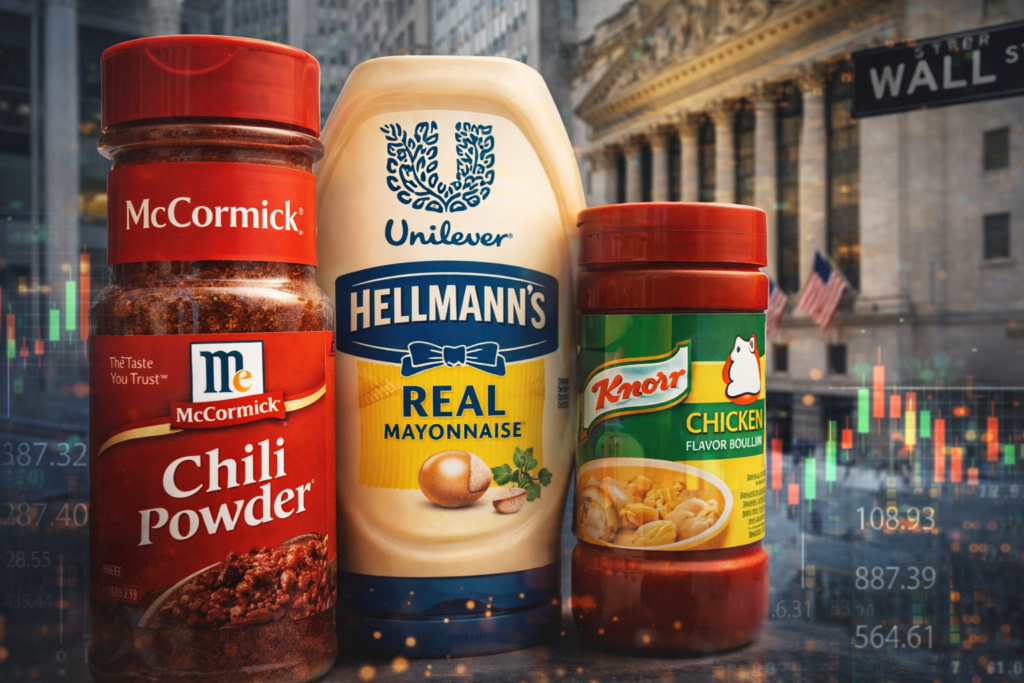 A spice rack is not supposed to feel like a market-moving asset. Yet on March 31, 2026, McCormick and Unilever made flavor a real Wall Street conversation. Their deal to combine Unilever’s foods business with McCormick was valued at about… Leia mais: Why McCormick and Unilever Put Flavor on Wall Street
 - Private Credit Stress Is Getting Visible
 For a long time, private credit’s biggest danger was that you could not see it clearly. That was the trade. Investors got higher yields, smoother marks, and less daily market noise. In return, they accepted opaque portfolios, illiquid structures, and… Leia mais: Private Credit Stress Is Getting Visible
Switzerland is adding pressure from the other side
There is also a second layer of risk here, and it sits back in Zurich.
Reuters reported that UBS’s U.S. expansion has become more urgent because the Swiss government is preparing tougher capital rules after the Credit Suisse rescue. UBS has criticized those proposed measures as excessive, and Reuters said its shares have fallen nearly 21% in 2026 as investors wait for clarity. The message is simple: UBS needs the U.S. wealth engine to work not just because America is attractive, but because the home-market regulatory burden may get heavier.
That makes the U.S. push feel less like a casual growth initiative and more like a strategic necessity.
And when a business has to work, markets usually become less forgiving about delays, defections, or underwhelming inflows.
What this means for investors now
For UBS shareholders, the key issue is not whether the U.S. plan is logical. It is.
The real issue is whether the bank can stabilize adviser retention, flip flows positive, and raise margins before the benefits of the charter finally arrive. UBS itself said it expects Americas net new assets to turn positive in 2026, supported by better recruiting and retention. Reuters, however, cited analysts who do not expect confidence in that turnaround before the third quarter.
For clients, the picture is more positive.
A harder UBS push in the U.S. should mean more competition for affluent and high-net-worth households, broader product offerings, and more pressure on rivals to sharpen their banking-plus-advice models. The problem is that better client outcomes do not automatically mean easier shareholder outcomes. Building a stronger platform can be expensive before it becomes rewarding.
So the cleanest investor read is this: the strategy is credible, but the setup is fragile.
The bottom line
UBS’s U.S. wealth push comes at a risky time because the opportunity and the pressure are arriving together.
America is the biggest wealth market in the world, and UBS now has a more powerful banking license to compete there. But the bank is also trying to grow while its Americas unit is still losing advisers, posting outflows, and operating with much thinner margins than top U.S. wealth rivals. Add in a risk-off client environment and the overhang of stricter Swiss capital rules, and the expansion suddenly looks less like a clean growth story and more like a high-stakes turnaround.
That does not mean UBS will fail in the U.S.
It means investors should stop treating the charter win as the finish line. It is the new opening move.
HypeBucks
XP of the Day: A wealth business stuck at a 13% margin is playing a very different game from one earning roughly 29%, even before adviser defections and outflows hit growth.
Next Move: Spend 10 minutes today checking whether any stock you own depends on a turnaround that is still waiting for client inflows to turn positive.