

A lot of people assume mergers only boom when the economy feels clean.
That is not how this cycle looks.
Wall Street still thinks 2026 could be a big M&A year even with war risk, sticky inflation fears, and market volatility because the real drivers of dealmaking are still in place: boards want growth, private equity needs exits and deployments, regulators look more manageable than they did a year ago, and financing markets are open enough to support very large transactions. In fact, Goldman Sachs CEO David Solomon said this week that he expects M&A activity to accelerate in 2026 despite the Iran war, and Dealogic data cited by Reuters show global deal activity is already up 23% year over year to about $1.1 trillion.
That is the part many investors miss. A big M&A year does not require perfect calm. It usually requires confidence that deals can get approved, financed, and defended to shareholders. Right now, Wall Street seems to believe those conditions are still good enough, even if they are not comfortable. Reuters reported from the Tulane Corporate Law Institute this week that nearly 1,000 senior bankers and M&A lawyers were still talking about 2026 as a strong year for deals, with activity near record highs and a growing sense that approvals are moving faster under the Trump administration than they did under Biden.
The biggest reason: the pipeline was already full
The first reason bankers are still bullish is simple: this year did not start from zero.
According to Reuters, 2025 was already a near-record M&A year. LSEG data showed global announced deal value hit $4.6 trillion, up 49% from 2024 and the highest total since 2021. There were also 68 deals worth more than $10 billion, the most since records began in 1980. That matters because strong M&A years tend to leave behind unfinished processes, active board discussions, and sponsors that still need to buy or sell businesses. In January, Reuters reported that lawyers and bankers were already describing the 2026 pipeline as “bulging.”
That kind of setup matters more than one ugly macro headline. When CEOs and boards have already spent months preparing asset sales, carve-outs, or acquisitions, they do not abandon every transaction just because oil spikes for a week. Instead, they get more selective on price, structure, and timing. That is why 2026 can still be a strong M&A year without feeling like a carefree one.
Regulation looks friendlier than it did before
This is probably the clearest reason Wall Street’s mood improved.
Under the current U.S. policy backdrop, dealmakers broadly believe merger review has become less hostile. Reuters reported this week that M&A lawyers at the Tulane conference said deals are closing faster under the Trump administration, which has eased one of the biggest worries that haunted dealmaking during the Biden years. Goldman’s Solomon also cited a more supportive U.S. regulatory climate as one of the core reasons he expects a stronger M&A year.
There are concrete signs behind that mood. In February, a federal judge blocked a rule that would have forced merging companies to turn over much more information in U.S. merger reviews, saying the FTC had exceeded its authority. That does not eliminate antitrust scrutiny, of course. Still, it lowers one procedural burden that dealmakers had been bracing for.
Even so, investors should not confuse “friendlier” with “easy.” Reuters reported this week that the DOJ’s antitrust chief said acquihires are a “red flag,” especially if companies appear to be structuring talent or IP deals to dodge formal merger review. Reuters also reported that the FTC remains focused on pharmaceutical competition and pushed back on a recent eye-surgery deal. So the better read is not that antitrust disappeared. It is that the market believes the odds of clearance improved enough to keep pursuing large strategic transactions.
Big companies still need deals for growth
Another reason 2026 still looks strong is that many companies are running out of easy organic answers.
That is especially true in sectors being reshaped by AI, infrastructure spending, and global supply-chain repositioning. Solomon said AI-driven capital investment and fiscal stimulus in developed economies were part of what could keep M&A moving. Reuters’ conference coverage echoed that view, saying corporate confidence remains high and that restructuring pressure is helping keep activity alive even while executives debate how AI will change their industries.
That logic matters because M&A is often less about optimism than necessity. A company may buy to gain scale, acquire technology, defend a market position, exit a weak segment, or speed up a strategic shift it cannot build internally fast enough. In an environment where AI may redraw business models, waiting can look riskier than acting. That does not guarantee smart deals. It does help explain why boards still want to talk.
Financing is not perfect, but it is still open
This is where the story gets more nuanced.
If debt markets were shut, the bullish M&A thesis would collapse quickly. That has not happened. Reuters reported on March 16 that banks launched the sale of a $5.75 billion cross-border loan tied to the $55 billion take-private of Electronic Arts, with a large multi-tranche financing package spanning dollars and euros. That is a very real sign that the market can still absorb massive acquisition financing when the deal and buyer group are strong enough.
At the same time, not every financing is working smoothly. Reuters also reported this week that investors are dumping software loans at discounts as AI disruption worries spread through credit markets. That matters because some software-heavy buyouts now face more skepticism than they did a few months ago. So financing is available, but it is not blind. Credit investors are becoming choosier about sectors, valuations, and future cash-flow durability.
That is one reason 2026 looks like a “big” M&A year rather than an easy one. Financing markets are still functional enough to fund major deals, but they are pushing harder on weaker stories. In practice, that can still produce a strong year in value terms because the best-capitalized buyers and clearest strategic transactions keep going even while shakier deals stall.
Private equity still has strong reasons to act
Private equity is another major piece of the puzzle.
In January, Reuters reported that a Citizens Financial survey of roughly 400 companies found 58% expected middle-market deal volume to increase in 2026. The same report said 86% of private-equity firms expressed strong confidence in decision-making by late 2025, up sharply from 48% earlier in the year, and that many firms planned to launch deals by the second quarter of 2026. That is important because private equity does not just wait for perfect conditions. Funds have capital to put to work, old portfolio companies to sell, and limited partners demanding realizations.
That pressure tends to keep the M&A machine running. It also helps explain why activity can remain strong in the middle market even when public-market sentiment gets shaky. If sponsors think valuations are reasonable and financing is available, they often move before elections, rate surprises, or further volatility change the math.
Read more posts from Nerd XP
Stay up-to-date on the latest news in the world of finance, geek culture, and skills.
- Central Banks Are Spelling Out a Multi-Asset Risk Map
 Most investors still talk about risk one shelf at a time. Stocks are risky. Bonds are defensive. Credit is someone else’s problem. Central banks are telling a different story now. Their latest warnings read less like isolated market commentary and… Leia mais: Central Banks Are Spelling Out a Multi-Asset Risk Map
 - Xbox and Gears Still Have Real Momentum
 For all the talk that Xbox has become too scattered, too platform-agnostic, or too far removed from the old console-war script, today tells a different story. Microsoft just announced that its June 7 Xbox Games Showcase will be followed immediately… Leia mais: Xbox and Gears Still Have Real Momentum
 - TikTok Wants to Be a Lender, Not Just a Platform
 For years, the TikTok story was simple: attention first, ads second, shopping maybe third. That model is changing fast. Reuters reported on March 31 that TikTok is seeking approval from Brazil’s central bank for two licenses that would let it… Leia mais: TikTok Wants to Be a Lender, Not Just a Platform
 - Portfolio Careers Beat the Side-Hustle Fantasy
 For years, people were sold a very specific dream. Start a side hustle. Work nights for a while. Then escape your job, replace your income, and finally control your life. That dream still sounds good. However, real life keeps exposing… Leia mais: Portfolio Careers Beat the Side-Hustle Fantasy
 - Why McCormick and Unilever Put Flavor on Wall Street
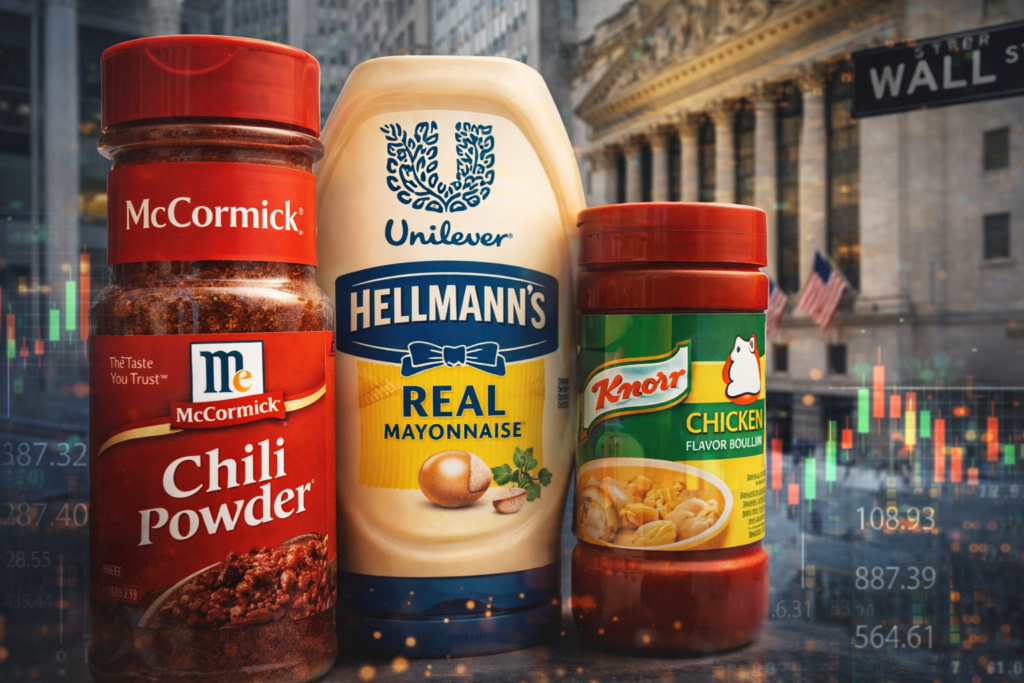 A spice rack is not supposed to feel like a market-moving asset. Yet on March 31, 2026, McCormick and Unilever made flavor a real Wall Street conversation. Their deal to combine Unilever’s foods business with McCormick was valued at about… Leia mais: Why McCormick and Unilever Put Flavor on Wall Street
 - Private Credit Stress Is Getting Visible
 For a long time, private credit’s biggest danger was that you could not see it clearly. That was the trade. Investors got higher yields, smoother marks, and less daily market noise. In return, they accepted opaque portfolios, illiquid structures, and… Leia mais: Private Credit Stress Is Getting Visible
Why Wall Street’s optimism is not a clean all-clear
This is where the story gets honest.
The same bankers who are bullish on 2026 also keep listing risks that could slow or distort the market. Reuters reported this week that conference conversations were dominated by AI disruption, war, oil, rates, and tariffs even as deal values surged. Solomon also warned about private-credit risk at the same time he defended the M&A outlook. In other words, nobody serious is saying this year is risk-free.
The Federal Reserve backdrop is also less friendly than many hoped. The Fed held rates at 3.5% to 3.75% on March 18 and said uncertainty remains elevated, including because of developments in the Middle East. Reuters then reported on March 20 that markets have sharply repriced the outlook and now see a meaningful chance of a rate hike rather than rapid easing. That kind of shift can make debt-financed deals harder to pencil out, especially if oil stays high and inflation remains sticky.
That is why the bullish M&A call has an asterisk. Wall Street is not expecting every category to rip higher. It is expecting enough large strategic deals, sponsor deals, restructurings, and carve-outs to keep total value high even if some sectors struggle. Software, for example, already looks more fragile because AI fears are disrupting credit appetite and valuations. Healthcare and Big Tech also still face meaningful antitrust attention.
What investors should take from this
For investors, a big M&A year matters for more than investment-banking fees.
Strong deal activity often signals that boards think financing is available, asset values are actionable, and strategic urgency is rising. It can help advisory firms, law firms, exchanges, data providers, buyout firms, and sectors where consolidation is still underway. Reuters reported in January that Wall Street banks were already shifting focus toward a busy 2026 after cashing in on big deals in 2025. That kind of pipeline supports fee revenue even when trading and capital markets stay volatile.
Still, investors should avoid reading M&A strength as proof the broader economy is safe. Sometimes deal booms happen because executives feel forced to reposition before conditions worsen. In other words, big M&A can reflect confidence, but it can also reflect pressure. This year, it looks like both.
The bottom line
Wall Street still thinks 2026 could be a big M&A year because the ingredients for dealmaking are still there even if the macro backdrop is ugly.
The pipeline is full after a near-record 2025. Regulation looks more navigable. Private equity still has capital and pressure to act. Large financings are still getting done. And AI, restructuring, and strategic urgency are giving boards real reasons to buy, sell, or merge now rather than wait. Global announced deal value is already around $1.1 trillion this year, up more than 20% from a year ago, which tells you this is not just banker wishful thinking.
But this is not a clean boom story. It is a selective one.
The strongest deals may keep moving while weaker financings, overvalued targets, and more sensitive sectors get challenged. That is why the smarter takeaway is not “everything is bullish.” It is “dealmaking can stay strong even when the economy feels messy, as long as the buyers, capital, and regulatory odds still line up.”
HypeBucks
XP of the Day: When announced deal value is up more than 20% year over year this early, that usually says the pipeline is real even if the headlines feel ugly.
Next Move: Spend 10 minutes today checking whether any stocks you own sit in sectors where consolidation pressure is rising, like media, industrials, healthcare, or software.