

For years, Netflix’s Assassin’s Creed series felt like one of those projects that only existed in corporate memory. It was announced in 2020, then went quiet, then resurfaced with a 2025 series order, and only now — with production underway in Rome — does it finally feel like a real show with a real point of view. That alone is why the phrase “finally looks like it gets it” lands. After a five-year gap between announcement and greenlight, and after a long stretch where the adaptation barely seemed alive, Netflix has started describing a version of Assassin’s Creed that sounds built around the franchise’s actual identity rather than its surface aesthetics.
That difference matters. Assassin’s Creed has never been just “hooded parkour in old buildings.” At its best, it is a series about power, memory, faith, control, and free will, staged across history through the war between Assassins and Templars. Netflix’s new logline leans directly into that core conflict, describing a thriller centered on two factions battling to shape humanity’s destiny, while Tudum says the series will tell an original story set in Rome in 64 AD and follow characters through pivotal historical events. That sounds far closer to the soul of the games than the usual adaptation trap of turning a rich franchise into generic action with a familiar logo attached.
It finally understands that history is the point
The smartest thing about the new reveal is the setting. Netflix says the series is telling an original story in the Roman Empire, with production based at Cinecittà Studios in Rome. Ubisoft’s announcement narrows that down to Rome, 64 AD, which gives the show a period with instant weight, political tension, and visual identity before anyone has even seen a trailer.
More importantly, choosing Ancient Rome feels like a genuine Assassin’s Creed move. It respects one of the franchise’s biggest strengths: using recognizable moments in history as dramatic pressure cookers, not just as background art. Rome already carries associations of empire, spectacle, religious anxiety, and state control, which fits the franchise’s Assassins-versus-Templars conflict almost too perfectly. Also, because the series is using an original story rather than directly adapting one game, it avoids the most obvious mistake possible: being trapped by fan-casting, lore checklisting, and endless “why isn’t this just Ezio?” discourse. It is drawing from the brand’s DNA instead of photocopying one beloved entry.
That original-story choice is probably the biggest sign that Netflix finally understands what makes Assassin’s Creed adaptable in the first place. The games are not powerful because one specific assassin is untouchable. They are powerful because the format itself works: secret war, historical immersion, ideological conflict, and a personal search for identity inside a much bigger machine. Tudum and Ubisoft are both describing exactly that framework. This looks less like a “content extraction” adaptation and more like a show using the franchise the way the franchise uses history.
Recommended by Nerd XP
This content may contain affiliate links. If you purchase through them, Nerd XP may receive a commission at no extra cost to you.
I’ve selected 3 items that can truly help you level up your XP, focusing on usefulness, cost-effectiveness, and real-world user experience.
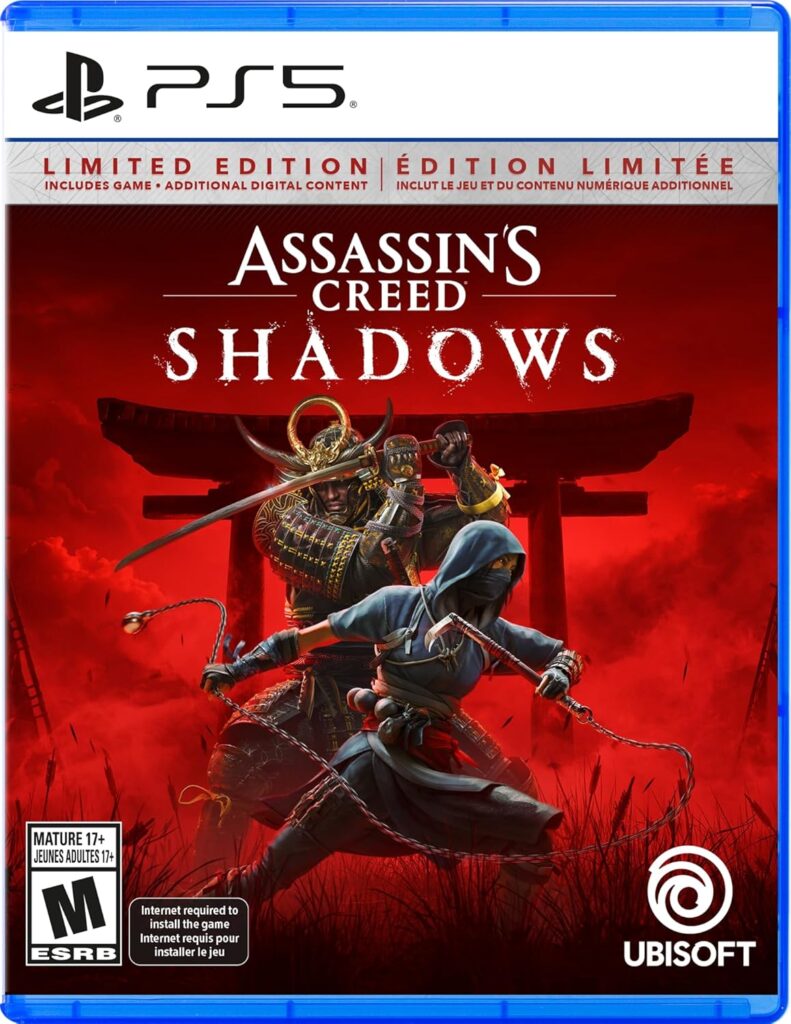
Assassin’s Creed Shadows – Limited Edition
PlayStation DualSense™ Wireless Controller

PlayStation®5 console – 1TB

The showrunners are talking about the right things
The second reason this feels more promising is the language coming from the creative team. Showrunners Roberto Patino and David Wiener are not selling the series as a pure stunt reel. In Netflix’s own announcement, they frame Assassin’s Creed as a story about purpose, identity, destiny, faith, and human connection “across cultures, across time,” with spectacle and parkour sitting on top of that foundation rather than replacing it. Ubisoft’s 2025 greenlight announcement repeats the same emphasis.
That may sound like standard prestige-TV phrasing, but in this case it actually lines up with what longtime fans have wanted from an adaptation. The best Assassin’s Creed stories are never only about movement. They are about the moral and philosophical tension behind movement. Why is this character fighting? Who is shaping history? What does freedom cost? What happens when institutions decide that order matters more than humanity? Those are much more interesting questions than “can the leap of faith look cool in live action,” even though, yes, the leap of faith should absolutely look cool in live action. The encouraging part is that Netflix seems aware that the parkour is the hook, not the whole meal.
There is another good sign here too. Patino and Wiener are not random hires. Netflix and Ubisoft officially attached them as creators, showrunners, and executive producers when the series was greenlit in July 2025, and that was the moment the project finally seemed to move from vague intention to actual authorship. The long delay before that was frustrating, but it may have helped the show avoid rushing into a version that misunderstood the material. Sometimes “finally” is a warning sign. Here, it might be the reason the adaptation has a better shot.
Even the packaging feels more serious now
The supporting details help too. The cast has expanded quickly in March 2026, with series regulars including Lola Petticrew, Toby Wallace, Zachary Hart, Laura Marcus, Tanzyn Crawford, Nabhaan Rizwan, and Claes Bang, while recurring players now include Noomi Rapace, Sean Harris, Ramzy Bedia, Corrado Invernizzi, Sandra Guldberg-Kampp, Youssef Kerkour, Mirren Mack, and Louis McCartney. That is not proof of quality by itself, but it does suggest Netflix and Ubisoft are building an ensemble world rather than hanging the entire adaptation on one instantly recognizable game protagonist.
The directing choice also points in the right direction. GameSpot reports, citing Variety, that Johan Renck is set to direct the series. Renck’s name matters because he brings more than genre competence; he brings visual severity and historical dread, which is a pretty good fit for a franchise that works best when conspiracy, violence, and memory all feel heavy. That does not guarantee greatness, of course. Still, it suggests the series wants a moodier, more cinematic identity than the kind of flat streaming adaptation that just rushes from reference to reference.
And that may be the clearest contrast with the bad version of this project people feared for years. A bad Assassin’s Creed show would focus on iconography first: hidden blades, rooftop chases, maybe some Animus noise, done. A better one understands that the iconography only works when it is attached to a worldview. Netflix now seems to be pitching exactly that worldview — freedom versus control, human connection versus institutional domination, personal identity versus historical machinery. That is much closer to Assassin’s Creed II, Brotherhood, Origins, and the series at large than a simple action reboot would have been.
Read more posts from Nerd XP
Stay up-to-date on the latest news in the world of finance, geek culture, and skills.
- Central Banks Are Spelling Out a Multi-Asset Risk Map
 Most investors still talk about risk one shelf at a time. Stocks are risky. Bonds are defensive. Credit is someone else’s problem. Central banks are telling a different story now. Their latest warnings read less like isolated market commentary and… Leia mais: Central Banks Are Spelling Out a Multi-Asset Risk Map
 - Xbox and Gears Still Have Real Momentum
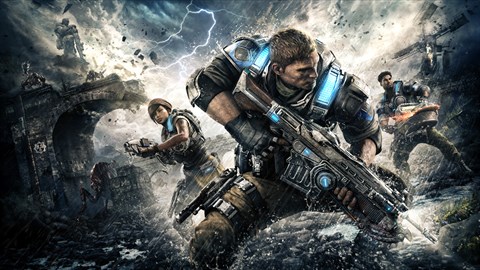 For all the talk that Xbox has become too scattered, too platform-agnostic, or too far removed from the old console-war script, today tells a different story. Microsoft just announced that its June 7 Xbox Games Showcase will be followed immediately… Leia mais: Xbox and Gears Still Have Real Momentum
 - TikTok Wants to Be a Lender, Not Just a Platform
 For years, the TikTok story was simple: attention first, ads second, shopping maybe third. That model is changing fast. Reuters reported on March 31 that TikTok is seeking approval from Brazil’s central bank for two licenses that would let it… Leia mais: TikTok Wants to Be a Lender, Not Just a Platform
 - Portfolio Careers Beat the Side-Hustle Fantasy
 For years, people were sold a very specific dream. Start a side hustle. Work nights for a while. Then escape your job, replace your income, and finally control your life. That dream still sounds good. However, real life keeps exposing… Leia mais: Portfolio Careers Beat the Side-Hustle Fantasy
 - Why McCormick and Unilever Put Flavor on Wall Street
 A spice rack is not supposed to feel like a market-moving asset. Yet on March 31, 2026, McCormick and Unilever made flavor a real Wall Street conversation. Their deal to combine Unilever’s foods business with McCormick was valued at about… Leia mais: Why McCormick and Unilever Put Flavor on Wall Street
 - Private Credit Stress Is Getting Visible
 For a long time, private credit’s biggest danger was that you could not see it clearly. That was the trade. Investors got higher yields, smoother marks, and less daily market noise. In return, they accepted opaque portfolios, illiquid structures, and… Leia mais: Private Credit Stress Is Getting Visible
Why this matters more than another game adaptation
Netflix has already shown it can handle game adaptations well in animation. Castlevania, Cyberpunk: Edgerunners, and similar projects helped build trust. Live action has been shakier, which is why Assassin’s Creed always carried more pressure. The Verge noted that Netflix’s game-to-TV track record has been far more consistent on the animated side than in live action. So when this project finally starts sounding coherent, it matters not just for Ubisoft fans but for Netflix’s broader credibility in the space.
It matters for Assassin’s Creed itself too. This is one of gaming’s biggest franchises, with Tudum saying the series has sold more than 230 million units worldwide. Yet it has always been slightly hard to adapt because it is both specific and elastic at the same time. The modern-day mythology can get messy. The historical settings are the main attraction. The ideological war is essential, but easily flattened. The new series seems to recognize that the solution is not to simplify the franchise into nonsense. It is to choose a strong historical moment, build a clear conflict, and trust the themes that were there all along.
That is why this finally feels right. Not finished, not proven, not guaranteed — just right in a way the project did not before. Netflix’s Assassin’s Creed finally looks like it gets that the franchise is not famous because people enjoy hoods and hay bales. It is famous because it turned history into a battleground for ideas. Now, at least on paper, the show seems ready to do the same.
NoobMaster
Easter Egg: The show is filming at Cinecittà Studios while expanding on an already established Ancient Rome set on the back lot.
Recommendation: Black Sails — because it understands how ideology, violence, and historical texture can make adventure feel much bigger than action alone.