
For years, people were sold a very specific dream. Start a side hustle. Work nights for a while. Then escape your job, replace your income, and finally control your life.
That dream still sounds good. However, real life keeps exposing the weak spot. A lot of “side hustles” are not building freedom. They are creating a second shift. Reuters recently profiled a worker who left corporate HR for coaching, found solo entrepreneurship exhausting and financially messy, and then rebuilt her work around a portfolio career with several income streams instead of one all-or-nothing business. Taken together with broader labor data, that looks less like a one-off story and more like a useful model for 2026.
The shift matters because the economy is pushing people in two directions at once. Workers want more flexibility, more meaning, and more control. At the same time, they also want stability, benefits, and less dependence on one employer or one platform. That tension is exactly why the side-hustle fantasy is starting to feel thin. What is replacing it is more practical: a portfolio career built on diversified income, stacked skills, and lower single-point-of-failure risk.
Why the side-hustle fantasy feels weaker now
A big reason is that many side jobs are not aspirational at all. They are defensive. Deloitte’s 2025 Gen Z and Millennial Survey found that around one-third of Gen Z and millennial respondents have a side job in addition to their primary job, and the top reason is needing another source of income. The same survey found that 52% of both groups say they are living paycheck to paycheck. That is not a glamorous rebellion against office life. It is a financial pressure response.
At the same time, younger workers are not organizing their careers around the old ladder anyway. Deloitte found that only 6% of Gen Z and millennial respondents say their main career goal is reaching a leadership position. Instead, they are prioritizing learning, development, meaning, and well-being, and 70% of Gen Z respondents say they are developing skills to advance their careers at least weekly. That makes a portfolio approach easier to understand. People are not just chasing promotion anymore. They are building optionality.
The labor market also makes diversification feel rational. BLS reports an annual average of 8.8 million multiple jobholders in 2025, though that figure excludes October because of the federal shutdown. MBO Partners says 36% of traditional employees now report having side gigs, and nearly half worry about job loss. In plain English, more workers are spreading risk because the old employer-employee bargain feels less secure than it used to.
What a portfolio career actually is
A portfolio career is not just “having a side hustle.” It is a deliberate mix of roles, clients, and income streams that fit around a core skill base.
That mix might include a main job plus consulting. It might look like contract work, teaching, advising, content, and freelance projects that all grow from the same expertise. Upwork’s 2025 workforce research describes one common model as the “freelance business owner,” someone managing a portfolio of clients and projects at the same time. The same report found that skilled moonlighters earned a median of $40,000 in freelance income on top of their full-time wages. That is a very different picture from selling random products online and hoping one thing goes viral.
That difference is the key. The side-hustle fantasy says one breakout offer will save you. The portfolio career says your work should be diversified enough that one weak month, one bad algorithm, or one lost client does not wreck the whole plan. Reuters’ example captured that clearly: after burning out on a one-business model, the worker rebuilt around executive coaching retainers, branded content, one-off coaching, and digital products. Less romance, more stability.
There is also evidence that independent work feels better for many people when it is chosen well. MBO says 63% of independents say this path is fully by choice, 84% report being happier, and 67% feel more secure. Pew likewise found that self-employed workers are more likely than non-self-employed workers to say they are highly satisfied with their jobs overall. That does not mean independence is easy. It does suggest that when people design it intentionally, it can feel more aligned than the standard model.
Why portfolio careers fit 2026 better
First, they fit the reality of unstable work better. MBO’s 2025 report says the U.S. had 72.9 million independents in 2025, with 5.6 million earning more than $100,000. That does not mean everyone should quit tomorrow. It does show that independent and mixed-model work is no longer fringe. It is mainstream enough to treat seriously.
Second, they let people compound skills instead of just hours. Deloitte found that 67% of Gen Z respondents are developing skills outside working hours, while 57% are already using generative AI in day-to-day work to some extent. MBO says 74% of independents use AI, and 61% say it saves time and increases output. Meanwhile, LinkedIn’s 2026 jobs report says the rise in founders and independent consultants points to a shift toward self-employment and gig work as professionals adapt to uncertainty. That combination matters. Workers are not simply moonlighting for cash. Many are using side work to sharpen capabilities, test services, and build career leverage.
Third, a portfolio career is often more honest about tradeoffs. The viral side-hustle pitch usually hides taxes, client acquisition, health insurance, admin work, and the emotional drain of always being “on.” Reuters’ example is useful because it shows exactly where the fantasy breaks: solo entrepreneurship can feel like trading a 9-to-5 for 24/7 pressure. A better portfolio model keeps diversification, but it also respects planning, recurring revenue, and the value of benefits.
Read more posts from Nerd XP
Stay up-to-date on the latest news in the world of finance, geek culture, and skills.
- Central Banks Are Spelling Out a Multi-Asset Risk Map
 Most investors still talk about risk one shelf at a time. Stocks are risky. Bonds are defensive. Credit is someone else’s problem. Central banks are telling a different story now. Their latest warnings read less like isolated market commentary and… Leia mais: Central Banks Are Spelling Out a Multi-Asset Risk Map
 - Xbox and Gears Still Have Real Momentum
 For all the talk that Xbox has become too scattered, too platform-agnostic, or too far removed from the old console-war script, today tells a different story. Microsoft just announced that its June 7 Xbox Games Showcase will be followed immediately… Leia mais: Xbox and Gears Still Have Real Momentum
 - TikTok Wants to Be a Lender, Not Just a Platform
 For years, the TikTok story was simple: attention first, ads second, shopping maybe third. That model is changing fast. Reuters reported on March 31 that TikTok is seeking approval from Brazil’s central bank for two licenses that would let it… Leia mais: TikTok Wants to Be a Lender, Not Just a Platform
 - Portfolio Careers Beat the Side-Hustle Fantasy
 For years, people were sold a very specific dream. Start a side hustle. Work nights for a while. Then escape your job, replace your income, and finally control your life. That dream still sounds good. However, real life keeps exposing… Leia mais: Portfolio Careers Beat the Side-Hustle Fantasy
 - Why McCormick and Unilever Put Flavor on Wall Street
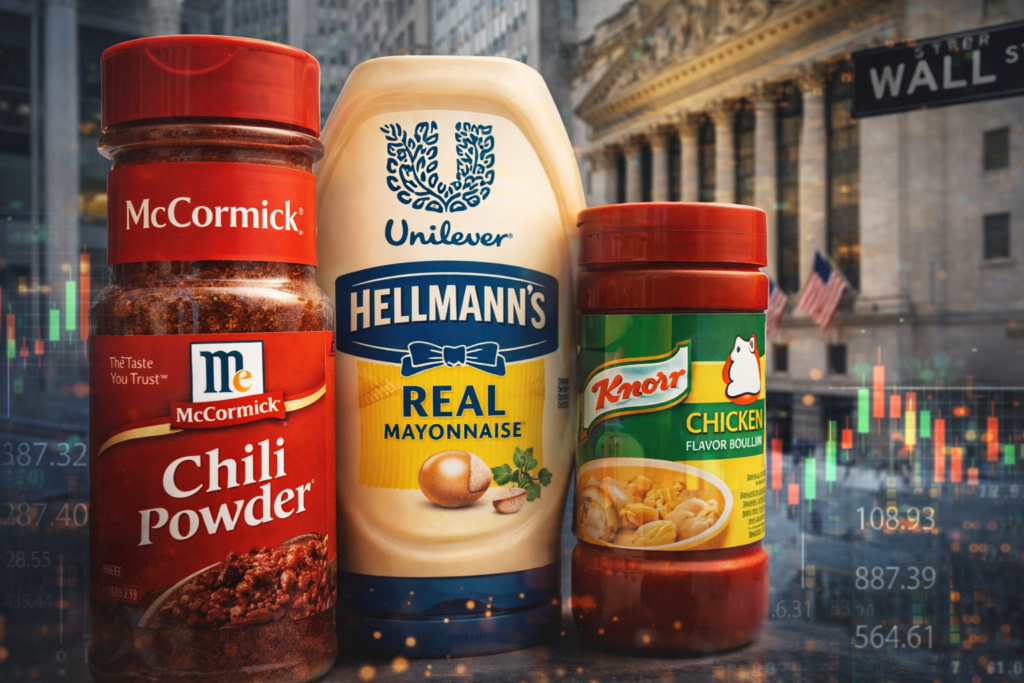 A spice rack is not supposed to feel like a market-moving asset. Yet on March 31, 2026, McCormick and Unilever made flavor a real Wall Street conversation. Their deal to combine Unilever’s foods business with McCormick was valued at about… Leia mais: Why McCormick and Unilever Put Flavor on Wall Street
 - Private Credit Stress Is Getting Visible
 For a long time, private credit’s biggest danger was that you could not see it clearly. That was the trade. Investors got higher yields, smoother marks, and less daily market noise. In return, they accepted opaque portfolios, illiquid structures, and… Leia mais: Private Credit Stress Is Getting Visible
How to build a portfolio career without turning into a chaos goblin
Start with one core skill
The best portfolio careers are not random. They are organized around one thing you do well enough to sell in different formats.
For example, a marketer might combine a main job, freelance strategy work, a small training product, and occasional advisory calls. A designer might mix contract projects, templates, and workshops. A software worker might pair a full-time role with a niche consulting practice. The point is not variety for its own sake. The point is letting one skill create several doors.
Add one adjacent income stream, not five
This is where people usually wreck themselves. They start too many unrelated things, then mistake exhaustion for ambition.
Instead, add one stream that fits your existing skills and calendar. Upwork’s data on skilled moonlighters is useful here because it points to side work that builds from real expertise, not just spare time. Start with something small enough to manage but valuable enough to learn from. Then let it earn the right to expand.
Prefer recurring work over viral hope
A portfolio career gets stronger when more of your income is predictable.
That means retainers, repeat clients, teaching cohorts, subscription-style services, or business-to-business work often beat one-off hits. Reuters’ example again makes this practical: shifting away from a model that constantly needed new one-on-one clients and toward more recurring and larger business clients gave the worker more runway. That is the kind of boring move that actually lowers stress.
Keep benefits, taxes, and admin in view
This is the least sexy part, which is why it matters so much.
Healthcare, emergency savings, taxes, invoicing, and legal structure are not side notes. They are part of whether the model is sustainable. Reuters’ reporting specifically highlighted financial planning and health insurance as major lessons for anyone trying to leave standard employment. A portfolio career works better when you treat it like a system, not a mood.
Measure the portfolio, not the hype
Track revenue by stream. Track time by stream. Track which work builds skill, which work pays best, and which work drains you.
That lets you prune weak branches and strengthen the useful ones. Over time, the goal is not to brag that you have five hustles. The goal is to build a work mix that earns well, teaches you something, and leaves enough energy to keep going.
The bottom line
The side-hustle fantasy is fading because it promised a clean escape story that real careers rarely follow.
What looks stronger in 2026 is the portfolio career: not one magic income stream, but a small, intentional set of them. That model fits the data better. Workers are taking side jobs partly because they need income, but they are also seeking flexibility, skill growth, and less dependence on one employer. Independent work is bigger, more chosen, and more normal than it used to be.
That does not mean everyone should become a freelancer. It means the smarter question is no longer, “What side hustle should I start?” It is, “How can I build more than one source of value from what I already do well?” That is a calmer question. It is also a much better one.
WolfBuilder
Build of the Week — 3 Steps:
- Write down one core skill you can sell in more than one format.
- Add one adjacent income stream that fits that skill, not five random ones.
- Track time, revenue, and stress for 30 days before expanding anything.