

A lot of job seekers are starting to feel the same thing: the resume still matters, but it no longer feels like enough.
That instinct is basically right. In March 2026, AP reported LinkedIn product manager Pat Whelan saying, “The resume is still an important part of the job search process but it is not sufficient. You need far more than your resume.” At the same time, NACE says nearly 70% of employers now use skills-based hiring, and Monster’s 2026 resume report found that only 6% of job seekers believe resumes are read thoroughly, while 77% worry their resume gets filtered out before a human sees it.
That does not mean the resume is dead. It means the resume is losing status as the main proof of ability. In a crowded, AI-polished market, employers are looking harder at what people can actually do, not just how well they summarize their background on one page. That is where “show-your-work hiring” comes in: portfolios, work samples, take-home assignments, job simulations, structured interview stories, and anything else that helps a company trust that your skills are real.
Why the resume is losing ground
The first problem is volume.
Greenhouse says application volume per recruiter is up 412% while recruiter headcount is down 56%. In a separate 2026 AI-in-hiring snapshot, Greenhouse also said 62% of recruiters report increased application volume, yet only 21% are very confident their systems are not filtering out qualified candidates. When that many applications hit a smaller hiring team, employers naturally look for faster ways to separate signal from noise.
The second problem is trust.
AI has made it easier for candidates to polish resumes, rewrite cover letters, and prepare for interviews. That can be helpful, but it also makes hiring teams more skeptical of what is really yours. Greenhouse says structured hiring is now a defense against AI-polished candidates, and recent Business Insider reporting described a “show your work” era where more companies are relying on work trials, simulations, and live demonstrations to verify that candidates can actually perform.
The third problem is that hiring itself is changing around skills.
NACE says 70% of employers in its Job Outlook 2026 survey use skills-based hiring, up from 65% the year before, and that employers use it most often during interviewing and screening. The same survey says GPA screening has fallen sharply, from 73% of employers in 2019 to 42% in 2026. Meanwhile, LinkedIn’s 2026 skills research says employers are increasingly prioritizing skills over degrees, job titles, or linear career paths.
So the shift is not really “resumes are gone.” The shift is that resumes have become weaker proxies. They still introduce you. They just do a worse job of closing the credibility gap on their own.
Read the latest posts from Skills XP
News about personal growth and skills development at Nerd XP.
- The Resume Is Losing Ground to Show-Your-Work Hiring
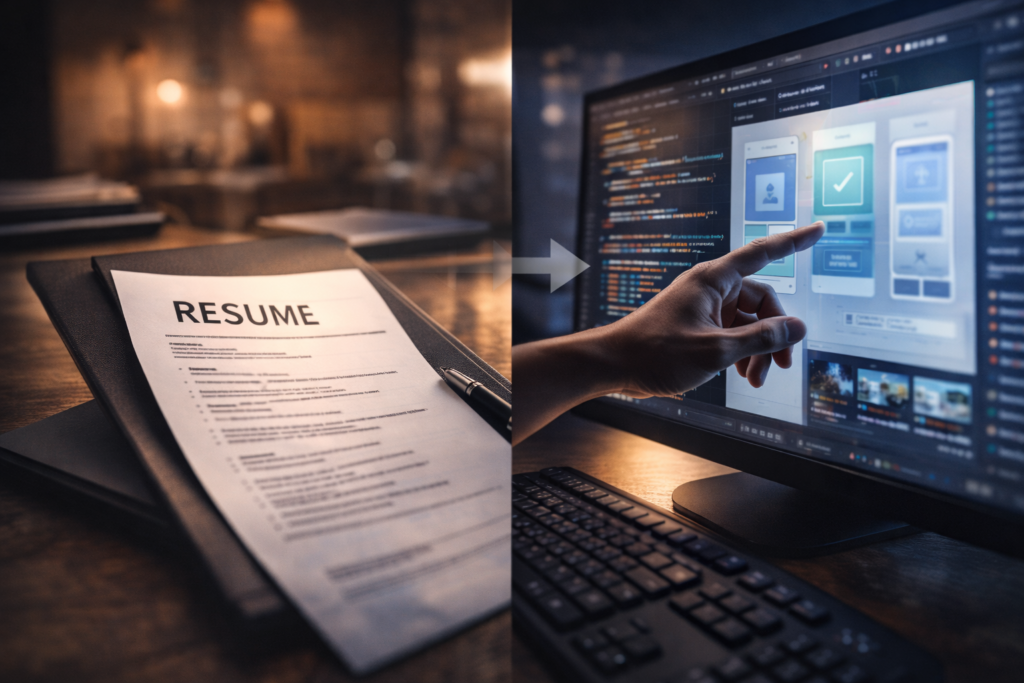 A lot of job seekers are starting to feel the same thing: the resume still… Leia mais: The Resume Is Losing Ground to Show-Your-Work Hiring
 - Workers Feel Like They’re Training AI Replacements
 A lot of workers are having the same uneasy thought right now: Am I helping… Leia mais: Workers Feel Like They’re Training AI Replacements
 - Portfolio Careers Beat the Side-Hustle Fantasy
 For years, people were sold a very specific dream. Start a side hustle. Work nights… Leia mais: Portfolio Careers Beat the Side-Hustle Fantasy
What “show-your-work hiring” actually looks like
In practice, this trend is less mysterious than it sounds.
Sometimes it means a portfolio. LinkedIn’s January 2026 guide says work portfolios are common in creative fields but can benefit almost any kind of job seeker, because they highlight projects that demonstrate the type of skills and experience you want to be known for. That can include case studies, published work, project screenshots, presentations, volunteer projects, or testimonials.
Other times it means a take-home assignment, a case study, or a job simulation. SHRM says more organizations are going beyond resumes and adding portfolio reviews, take-home assignments, structured interviews, and job simulations to assess real-world skills. Business Insider’s recent reporting shows some companies going even further, using paid work trials to see how candidates solve problems, collaborate, and use AI in an actual work setting.
Very often, though, it is something simpler: your ability to explain specific examples.
NACE says the top way students can demonstrate skills in preparation for interviews is to share examples and situations where they used their skills to solve problems. It also says employers value experiential learning heavily, with nearly all respondents seeing U.S.-based internships as valuable and more than 40% seeking candidates with on-campus work or apprenticeships. That is show-your-work hiring too. It just happens in conversation instead of a formal portfolio.
That is an important point because people often overreact to this trend. They assume they now need a flashy personal website, a cinematic case study, and ten polished side projects. Usually, they do not. What employers really want is evidence they can trust.
Why this is happening now
Part of the answer is the market itself.
LinkedIn’s January 2026 labor-market report says global hiring remains 20% below pre-pandemic levels and job transitions sit at a 10-year low. That kind of slower, more selective market gives employers more room to ask for proof, especially when AI has made applications faster to generate and harder to trust at face value.
Another part is that work is becoming less linear.
LinkedIn’s 2026 skills work says employers are following a broader shift away from rigid degree-and-title signals and toward capabilities. Business Insider recently quoted LinkedIn executive Aneesh Raman arguing that AI is replacing the old career ladder with more nonlinear skill-based movement. Whether or not you like that metaphor, the implication is clear: employers are growing less attached to tidy resumes and more interested in what you can do across changing tasks.
That makes a lot of old job-search advice weaker. “Have the right title” matters less if the job itself is changing. “Went to the right school” matters less if companies care more about applied capability. “Wrote a clean resume” matters less if every other applicant did that too.
Read the latest posts from Nerd XP
Stay up-to-date on the latest news in the world of finance, geek culture, and skills.
- BlackRock vs. QQQ Is a Smart Retail-Investing Story
 Most ETF stories are boring on purpose. A firm files a fund, the market shrugs,… Leia mais: BlackRock vs. QQQ Is a Smart Retail-Investing Story
 - Xbox’s New Game Pass Wave Is Today’s Cleanest Topic
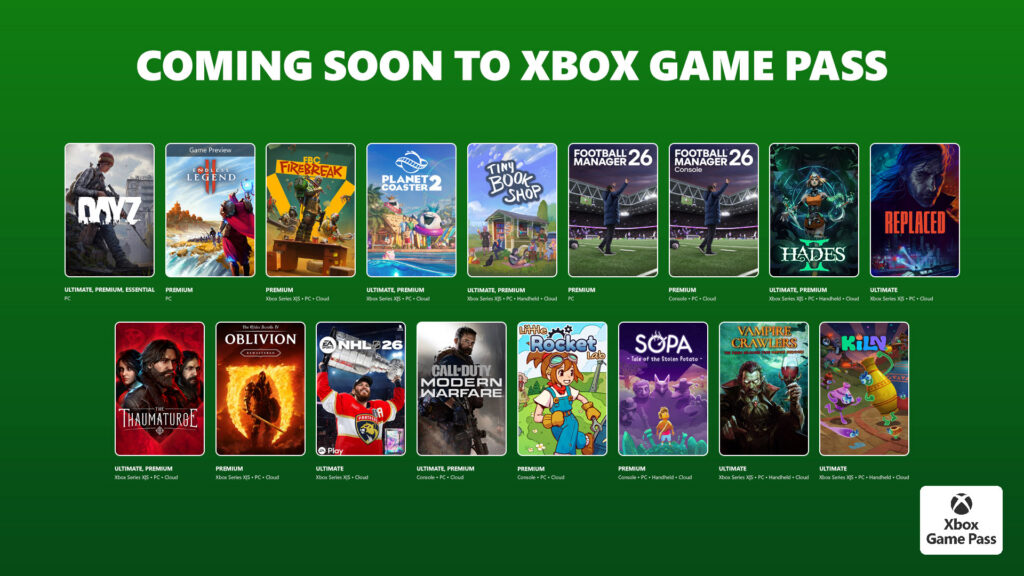 Sometimes the best gaming story of the day is not the loudest one. It is… Leia mais: Xbox’s New Game Pass Wave Is Today’s Cleanest Topic
 - The Oil Shock Is Hitting Flights and Travel Costs Now
 For a while, the oil shock looked like a macro problem that travelers would feel… Leia mais: The Oil Shock Is Hitting Flights and Travel Costs Now
 - The Resume Is Losing Ground to Show-Your-Work HiringA lot of job seekers are starting to feel the same thing: the resume still… Leia mais: The Resume Is Losing Ground to Show-Your-Work Hiring
- Private Credit Just Took a Fresh Ratings Hit
 Private credit just took a fresh ratings hit, and this one matters because it lands… Leia mais: Private Credit Just Took a Fresh Ratings Hit
 - Super Mario Galaxy Is Still the Biggest Geek Story
 A week after The Super Mario Galaxy Movie opened on April 1, 2026, Super Mario… Leia mais: Super Mario Galaxy Is Still the Biggest Geek Story
What job seekers should do now
First, keep the resume, but demote it in your mind.
Your resume is still the front door. It just should not be your whole case. AP’s reporting is useful here because it cuts through the false choice: you do need a strong resume, but you also need “far more” than that. The smarter approach is to treat the resume like a summary of claims and your work samples like the evidence behind those claims.
Next, build a small proof portfolio.
This does not need to be fancy. LinkedIn explicitly says a good portfolio is curated, not exhaustive, and that most professionals can benefit from one. A strong proof portfolio might include two to four examples such as a project summary, a before-and-after result, a slide deck, a process improvement, a writing sample, a dashboard screenshot, a code sample, or a short case study showing the problem, your actions, and the outcome.
Then, get better at telling work stories.
NACE says employers want examples of when you used your skills to solve problems. That means your interview prep should sound less like “I’m a strong communicator” and more like “Here was the situation, here’s what I changed, and here’s what happened next.” If you can do that clearly, you are already adapting to show-your-work hiring, even without a formal portfolio.
It also helps to surface real experience wherever you got it.
NACE’s 2026 guidance emphasizes internships, co-ops, campus work, apprenticeships, projects, and extracurricular work that can be translated into professional skills. That is good news for people who feel underqualified on paper. In a show-your-work market, relevant proof often travels better than prestige alone.
Finally, expect more verification.
Because candidates now use AI more often, Greenhouse says structured scorecards, case studies, and disciplined evaluation matter more than ever. That means more employers are likely to test, probe, and ask for evidence instead of simply taking polished materials at face value. Rather than fighting that shift, job seekers should prepare for it. Bring examples. Know your numbers. Be ready to explain your process.
The bottom line
The resume is losing ground because hiring teams trust claims less than they used to.
Too many applications, too much AI polishing, and a broader shift toward skills-based hiring have changed what employers look for. Resumes still matter, but they increasingly function as introductions, not verdicts. What carries more weight now is proof: a sample, a case study, a concrete story, a project, a simulation, or a track record you can explain clearly.
That is actually good news for a lot of workers.
If hiring moves even a little further away from prestige filters and a little closer to demonstrated ability, more people get a real chance to compete. The adjustment is not always comfortable. Still, it is practical. Build the resume, yes. Then build the evidence behind it. That is what show-your-work hiring rewards.
WolfBuilder
Build of the Week — 3 Steps:
- Pick three resume bullets and attach one proof item to each.
- Write one short work story for each skill you want to be hired for.
- Add one portfolio or proof link to your resume or LinkedIn profile.