
A lot of workers are not just tired right now. They are uneasy.
That matters because the mood at work is clearly softening. Gallup’s State of the Global Workplace 2026 says only 20% of employees worldwide were engaged in 2025, down from 23% in 2022 and 2023. At the same time, 64% were not engaged, 16% were actively disengaged, and 40% said they felt a lot of stress the previous day. Anger and sadness also stayed above pre-pandemic levels.
Now layer AI on top of that. ManpowerGroup’s 2026 Global Talent Barometer says regular AI use rose to 45% of workers, yet confidence in using technology fell by 18%. It also found that 43% of workers fear automation may replace their job within the next two years. Reuters, citing Randstad’s 2026 global survey, reported that four in five workers expect AI to affect their daily tasks, while many are skeptical that companies mainly want anything other than cost savings and efficiency.
That does not prove AI is the sole reason engagement is falling. It does suggest something more useful: AI anxiety is landing on top of an already fragile workforce. When people feel detached, stressed, and unsure about their future, new technology does not arrive as a neutral tool. It arrives as a test of trust.
The workplace was already more fragile than many leaders wanted to admit
Gallup’s global data shows the engagement slide is not a small wobble. Global employee engagement fell to its lowest level since 2020, while wellbeing improved only slightly to 34% thriving. Regionally, Europe was the least engaged at 12%, while the U.S. and Canada were at 31%. That is not a picture of a healthy, resilient workforce waiting calmly for the next wave of change.
ADP’s 2026 Today at Work report helps explain why the mood feels shaky. Only 22% of workers globally strongly agreed their job was safe from elimination in 2025. ADP also found that people who feared losing their jobs were less engaged, more stressed, less productive, and more likely to spend time looking elsewhere. In other words, insecurity does not just hurt morale. It drains attention and loyalty at the same time.
The gap between safety and engagement is especially important. ADP found that workers who felt secure in their jobs were six times more likely to be fully engaged and 3.3 times more likely to say they were highly productive. It also found that 53% of workers who strongly agreed their employer was investing in them were fully engaged, versus only 12% among workers who did not feel that support. So the emotional climate around work is not random. It responds to whether people feel protected and developed.
Read the latest posts from Skills XP
News about personal growth and skills development at Nerd XP.
- Global Engagement Falls While AI Job Fear Rises
 A lot of workers are not just tired right now. They are uneasy. That matters… Leia mais: Global Engagement Falls While AI Job Fear Rises
 - Global Engagement Falls as AI Anxiety Rises
 A lot of workers are not just tired right now. They are wary. That matters… Leia mais: Global Engagement Falls as AI Anxiety Rises
 - The Resume Is Losing Ground to Show-Your-Work Hiring
 A lot of job seekers are starting to feel the same thing: the resume still… Leia mais: The Resume Is Losing Ground to Show-Your-Work Hiring
AI fear makes a weak culture weaker
This is where the AI story gets more serious. The issue is not just that workers fear replacement. It is that many organizations are rolling out AI into cultures that were already low on trust and clarity.
Deloitte’s 2026 Human Capital Trends work calls this “cultural debt.” In its survey, 42% of workers said their organization rarely evaluates AI’s impact on people. More strikingly, 80% of leaders, managers, and workers said they worry coworkers are using AI to appear more productive than they really are. That is a trust problem, not just a technology problem.
Thomson Reuters Institute found something similar in professional services. Its March 2026 analysis said a disconnect between AI availability and organizational guidance is creating confusion that may undermine both employee experience and AI’s value. Around 40% of surveyed professionals said they were receiving contradictory guidance from clients and leadership about AI tool usage. When the rules feel fuzzy, workers do not become more confident. They become more cautious and more political.
That confusion shows up in the larger workforce too. JFF’s March 2026 survey found that only 36% of workers say they have the training and resources they need to use AI in their jobs, down from 45% a year earlier. It also found that 47% say they need new skills because of AI’s impact, while 56% say their employers have not consulted them about how AI tools are used in their work. That is exactly how anxiety grows: the technology moves fast, while training, explanation, and worker influence lag behind.
This is not just fear of replacement. It is fear of not fitting anymore
A lot of workers can handle change. What they struggle with is ambiguity.
ManpowerGroup’s 2026 data makes that visible. It found that 89% of workers still feel they have the skills to succeed in their current role, yet 43% fear automation may replace their job within two years. That is a very specific kind of stress. People often do not feel incompetent today. They feel unsure they will still count tomorrow.
Gallup’s latest April 2026 workplace analysis shows the same direction in the U.S. Its Q1 2026 workforce survey found that 18% of U.S. employees now say it is somewhat or very likely their job will be eliminated within five years because of automation or AI, up from 15% in the prior two years. In organizations where employees say AI has already been implemented, that figure rises to 23%. Gallup also notes that managers are critical for AI adoption, yet manager engagement is slipping and is driving much of the recent downturn in engagement.
There is also a subtle productivity trap here. ADP found that frequent AI users were more engaged, less stressed, and more positive about teammates, but they did not report feeling more productive. In fact, daily AI users were four times more likely than non-users to say they felt less productive than they could be. That helps explain why AI can feel unsettling even when people are using it. More exposure does not automatically create more confidence. Sometimes it just creates more supervision and more self-doubt.
Read the latest posts from Nerd XP
Stay up-to-date on the latest news in the world of finance, geek culture, and skills.
- OpenAI’s Ad Business Just Became a Finance Story
 For a while, OpenAI’s ads looked like a product experiment. Now they look like capital-markets… Leia mais: OpenAI’s Ad Business Just Became a Finance Story
 - Defense IPO Mania Is Heating Up Again
 Most IPO booms need a clean macro story. Lower rates help. Stable markets help. Happy… Leia mais: Defense IPO Mania Is Heating Up Again
 - Global Engagement Falls While AI Job Fear RisesA lot of workers are not just tired right now. They are uneasy. That matters… Leia mais: Global Engagement Falls While AI Job Fear Rises
- Meta’s $21B CoreWeave Deal Says AI Is Still All-In
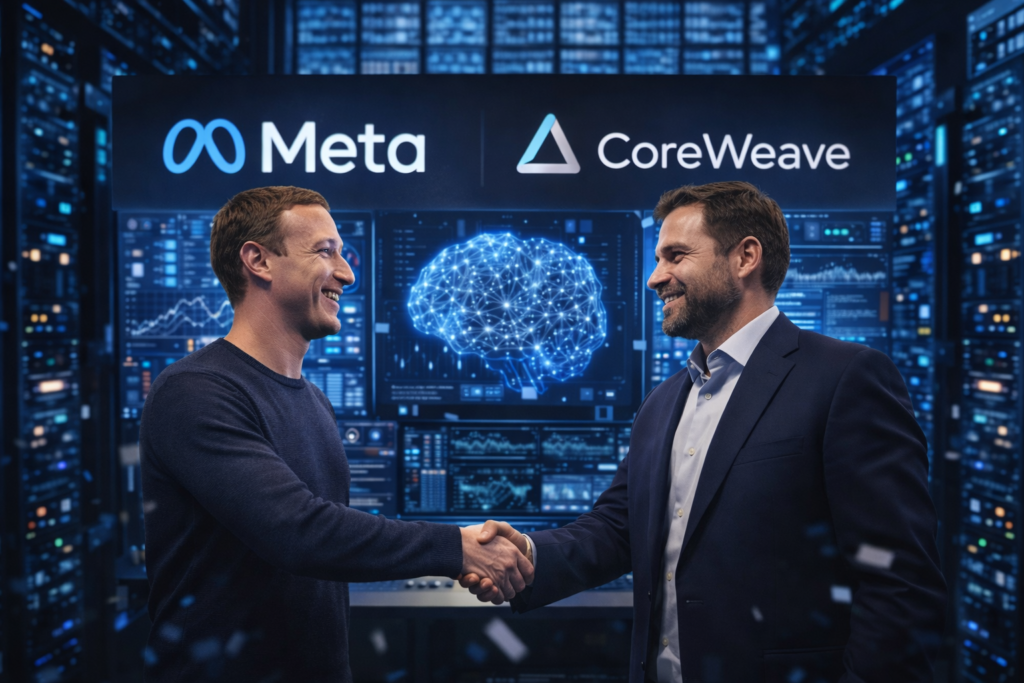 For a market that keeps asking when the AI spending binge will cool off, Meta… Leia mais: Meta’s $21B CoreWeave Deal Says AI Is Still All-In
 - Wednesday Season 3 Is Today’s Cleanest Fandom Spike
 Not every fandom surge is created equal. Some feel messy, rumor-driven, or weirdly over-engineered. Wednesday… Leia mais: Wednesday Season 3 Is Today’s Cleanest Fandom Spike
 - The Relief Rally Just Ran Into Fragile Ceasefire Risk
 Wednesday’s market message looked simple: ceasefire, oil down, stocks up, panic over. Thursday’s market message… Leia mais: The Relief Rally Just Ran Into Fragile Ceasefire Risk
What actually helps
The most useful response is not to tell people to “embrace AI” harder. Workers usually need three things before engagement recovers: clarity, capability, and fairness.
First, leaders need to explain where people still fit. ADP’s data shows job security sentiment is tightly linked to engagement and productivity, while Gallup’s research shows engagement falls when workers feel detached from employers during disruption. So vague language about “transformation” is not enough. People need to know what tasks are changing, what skills will matter more, and how their role can still grow.
Next, organizations need to train workers like they mean it. JFF’s numbers make it hard to defend the current approach: only about one-third of workers say they have the training and resources they need for AI at work. If leaders want less fear, they need to replace passive tool rollout with real practice, examples, and support. Otherwise, AI becomes one more thing employees are expected to absorb on their own time.
Finally, trust has to be protected on purpose. Deloitte’s warning about cultural debt is useful because it names the deeper issue. If workers think AI is changing performance standards, blurring authorship, and rewarding people for looking productive instead of being useful, engagement will keep slipping. The fix is not only better software. It is clearer norms, better manager communication, and more worker say in how new tools get used.
The bottom line
Global engagement is falling while AI job fear rises, and those two trends are feeding each other.
The current numbers do not show a world where workers are calmly greeting AI as pure progress. They show a workforce that is already stressed, only partly engaged, and uncertain about job security. In that environment, AI anxiety grows fastest where training is thin, guidance is contradictory, and leadership stays vague.
That is the real lesson. AI does not automatically destroy engagement. Bad leadership around AI can. The organizations that handle this well will not just deploy new tools. They will explain the future more clearly, train people more seriously, and make workers feel like participants in the change instead of casualties of it.
WolfBuilder
Build of the Week — 3 Steps:
- Ask what part of your work is changing because of AI, not just whether AI is “coming.”
- Identify one skill that keeps you valuable above the routine layer.
- Push for one clearer conversation at work about training, expectations, or role changes.