
For a long time, HBO’s Harry Potter reboot felt less like a show and more like a permanent argument. It was easy to discuss, easy to doubt, and weirdly hard to picture. Now that has changed. Production officially began on July 13, 2025 at Warner Bros. Studios Leavesden, HBO has locked in its central trio and a large supporting cast, and on March 24, 2026 the studio released its first official image of Dominic McLaughlin as Harry. Add in an early 2027 release target, and the project has crossed a very important line: it no longer feels theoretical. It feels like a real piece of television that is actually coming.
That may sound obvious, but it matters more than usual here. Reboots often become “real” the moment you can sense shape, scale, and intention all at once. Before now, this one mostly had scale. People knew it would be expensive, high-profile, and controversial by default. What it lacked was texture. The March first-look image helped because it was not a logo, not a casting rumor, and not another executive promise. It was a visual signal that Hogwarts, Quidditch, costumes, and this new Harry now exist in front of a camera, not just inside a development deck.
The reboot finally has physical form
One reason the show now feels tangible is simple: the casting has reached critical mass. HBO confirmed John Lithgow as Dumbledore, Janet McTeer as McGonagall, Paapa Essiedu as Snape, Nick Frost as Hagrid, Luke Thallon as Quirrell, and Paul Whitehouse as Filch in April 2025. Then came the bigger emotional step in May 2025, when Dominic McLaughlin, Arabella Stanton, and Alastair Stout were revealed as Harry, Hermione, and Ron after what Francesca Gardiner and Mark Mylod described as an enormous search through tens of thousands of auditions. June added the Malfoys, Molly Weasley, the Dursleys, and Cornelius Fudge. March 2026 expanded the Hogwarts student roster again. That is how a reboot stops feeling like one bold headline and starts feeling like an ecosystem.
The behind-the-camera pieces help just as much. When production kicked off, Wizarding World also confirmed key department heads including Adriano Goldman as cinematographer, Holly Waddington on costume design, Mara LePere-Schloop on production design, and Alexis Wajsbrot overseeing visual effects. Then, in January 2026, HBO confirmed that Hans Zimmer and Bleeding Fingers would compose the new score. None of that guarantees quality, of course. Still, those are not the moves of a half-formed nostalgia play. They are the moves of a studio building a premium flagship from the ground up.
And honestly, that is part of why the new image lands. It is not just “here is the boy with the glasses again.” It arrives after months of concrete staffing, cast expansion, and visible production momentum. Because of that, the image works like confirmation rather than bait. The reboot now has bodies, departments, sets, music, and a calendar. That is usually the point where fandom stops asking whether something exists and starts arguing about what it is.
Recommended by Nerd XP
This content may contain affiliate links. If you purchase through them, Nerd XP may receive a commission at no extra cost to you.
I’ve selected 6 items that can truly help you level up your XP, focusing on usefulness, cost-effectiveness, and real-world user experience.
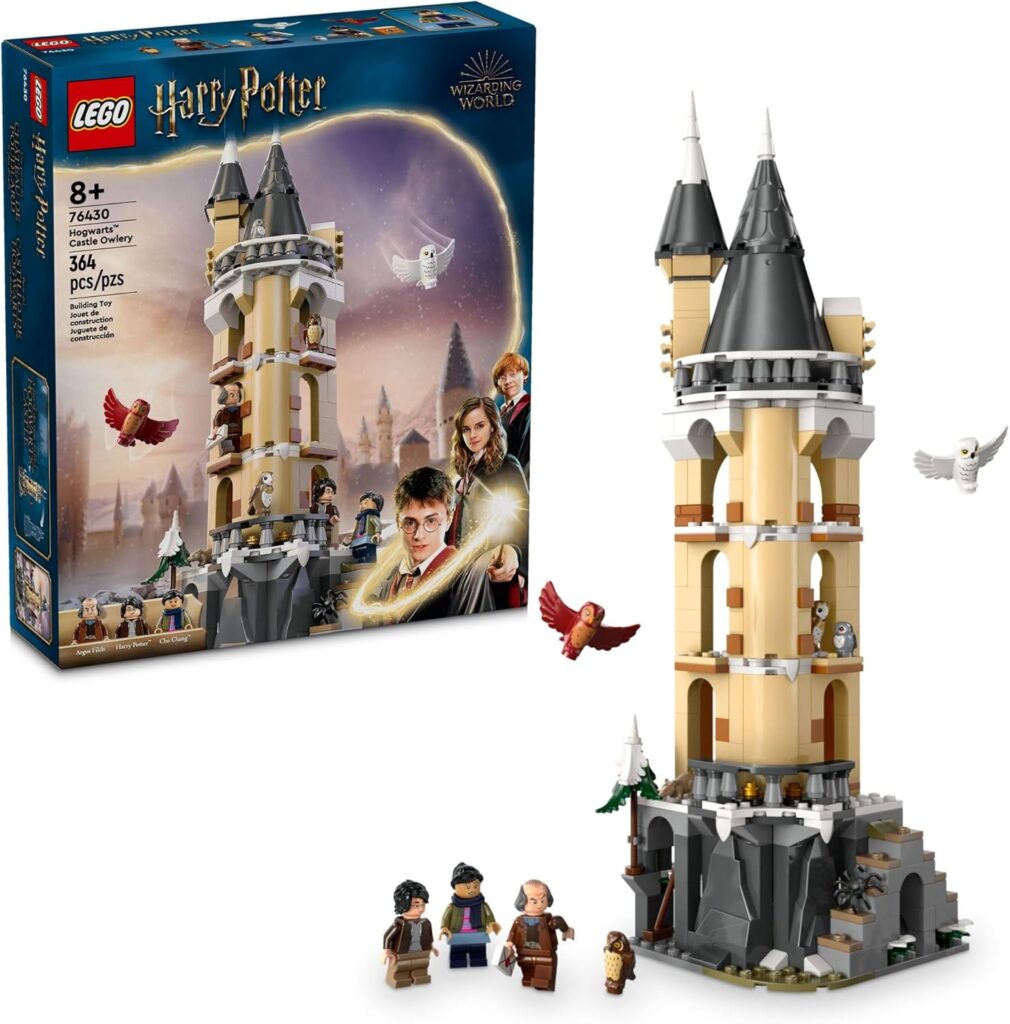
LEGO Harry Potter Hogwarts Castle Owlery
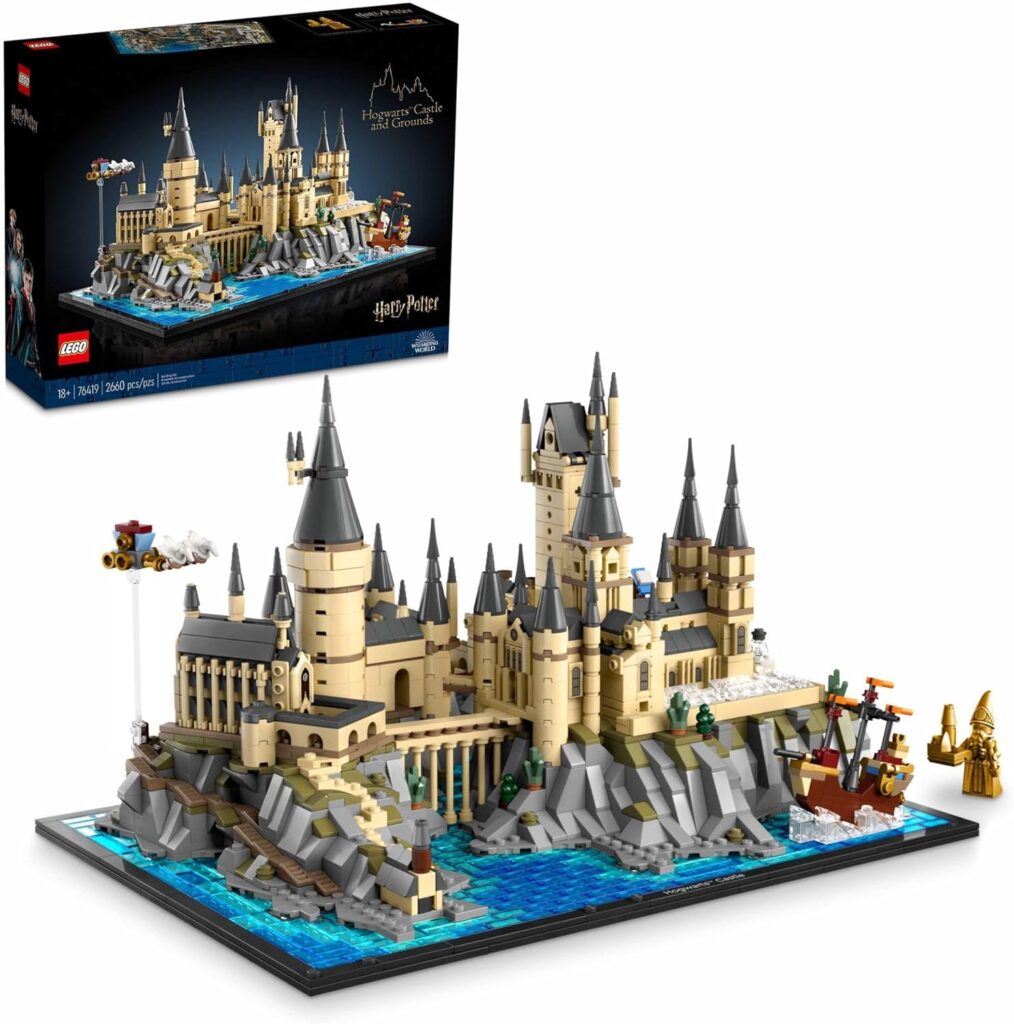
LEGO Harry Potter Hogwarts and Grounds
Harry Potter Metal Bookmark

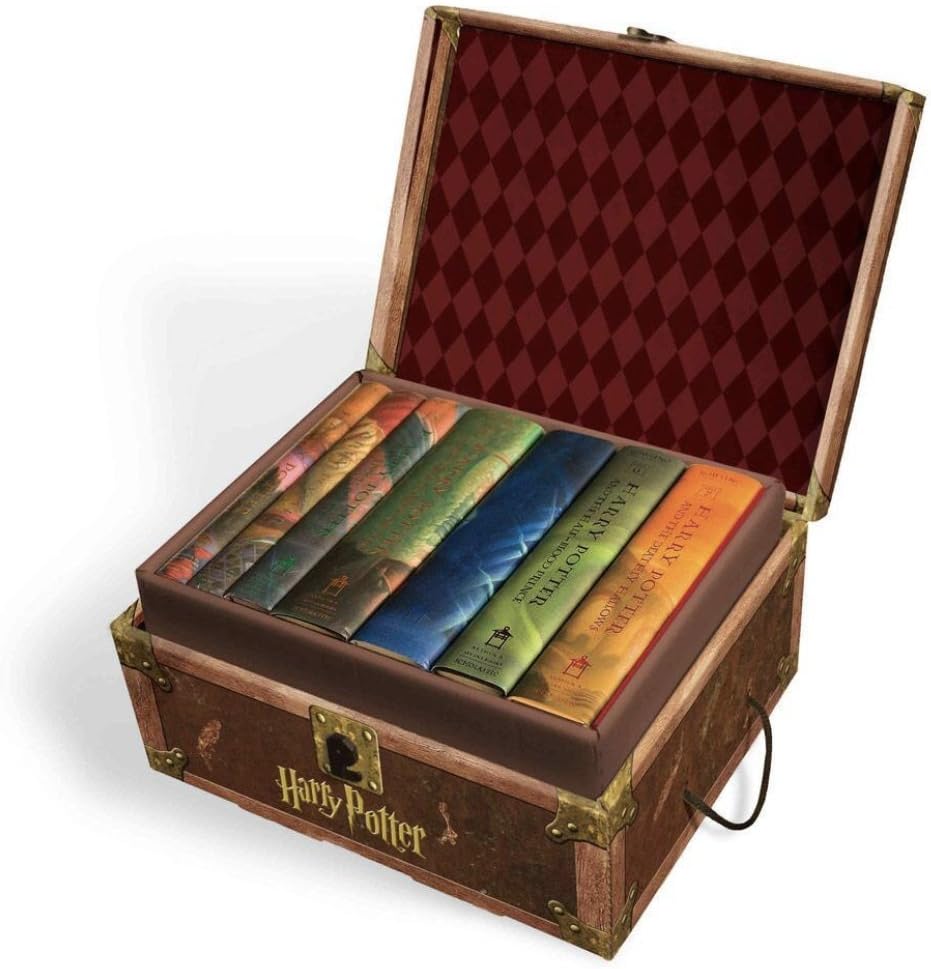
Harry Potter Books Set #1-7 in Collectible Trunk-Like
Harry Potter: The Complete 8-Film Collection
Hogwarts Legacy – PlayStation 5
HBO is treating this like a real crown jewel
The other reason it feels real is that HBO is talking about it like a project with unusual weight, not routine franchise maintenance. At Series Mania this week, HBO Max executive Sarah Aubrey said the company had made “such a big commitment” to the show and called it “a financial investment we normally wouldn’t make.” She also said “the world that has been created is absolutely extraordinary” and described the series as both high-pressure and very special. That is corporate language, sure, but it is revealing corporate language. HBO is not framing this as another useful title for the platform. It is framing it as one of the network’s defining long-term bets.
That scale becomes even clearer when you look at the format. Aubrey said the plan is for each season to adapt one book, while Casey Bloys has pointed to an early 2027 premiere window for Season 1. Back in December 2024, Gardiner and Mylod also explained the appeal of the format in much plainer terms: “We have 8 hours to tell the first book.” That one line may be the most convincing creative pitch the reboot has offered so far. It tells fans this is not trying to outrun the films or simply repaint them. It is trying to use television’s actual advantage: time.
That matters because Harry Potter is one of those properties where scale alone is not impressive anymore. Everybody already knows the world is big. Everybody already knows the brand is huge. What people want from a reboot is a reason it should exist in this form. “We have 8 hours to tell the first book” is finally a reason. It suggests a show that can breathe, linger, and dig into details the films had to compress. In other words, it sounds less like recycling and more like a format correction.
It finally sounds like TV, not just Harry Potter again
This is where the reboot gets more interesting than a standard recast story. The official creative pitch has been pretty consistent: go deeper into the books, return to places the films skipped, and use long-form storytelling to explore the world with more detail. Gardiner and Mylod specifically teased Peeves, the Hogwarts staffroom, and a broader exploration of Hogwarts itself, while also stressing more age-accurate casting logic for characters like Snape. That is not a flashy sales pitch, but it is a smart one. It suggests the team understands that the strongest case for a Harry Potter TV show is not bigger spectacle. It is richer texture.
That also explains why the reboot now feels more legitimate than it did a year ago. Back then, the loudest reactions were mostly ideological or nostalgic: why remake the films, why touch something so embedded, why restart so soon? Those questions have not disappeared. However, the show now has a visible answer. It is not saying, “What if Harry Potter again?” It is saying, “What if the books finally got room?” For a franchise this dense, that is a much more compelling proposition.
There is also something quietly smart about how the new series is positioning itself against the films rather than in denial of them. The official messaging keeps emphasizing that the original movies remain central to the franchise and available globally. That lowers the need for the reboot to behave like a replacement. Instead, it can sell itself as a parallel long-form adaptation for a new generation and for older fans who always wanted more of the books back on screen. That is a much healthier lane than trying to beat the films at their own memory game.
Read more posts from Nerd XP
Stay up-to-date on the latest news in the world of finance, geek culture, and skills.
- Central Banks Are Spelling Out a Multi-Asset Risk Map
 Most investors still talk about risk one shelf at a time. Stocks are risky. Bonds are defensive. Credit is someone else’s problem. Central banks are telling a different story now. Their latest warnings read less like isolated market commentary and… Leia mais: Central Banks Are Spelling Out a Multi-Asset Risk Map
 - Xbox and Gears Still Have Real Momentum
 For all the talk that Xbox has become too scattered, too platform-agnostic, or too far removed from the old console-war script, today tells a different story. Microsoft just announced that its June 7 Xbox Games Showcase will be followed immediately… Leia mais: Xbox and Gears Still Have Real Momentum
 - TikTok Wants to Be a Lender, Not Just a Platform
 For years, the TikTok story was simple: attention first, ads second, shopping maybe third. That model is changing fast. Reuters reported on March 31 that TikTok is seeking approval from Brazil’s central bank for two licenses that would let it… Leia mais: TikTok Wants to Be a Lender, Not Just a Platform
 - Portfolio Careers Beat the Side-Hustle Fantasy
 For years, people were sold a very specific dream. Start a side hustle. Work nights for a while. Then escape your job, replace your income, and finally control your life. That dream still sounds good. However, real life keeps exposing… Leia mais: Portfolio Careers Beat the Side-Hustle Fantasy
 - Why McCormick and Unilever Put Flavor on Wall Street
 A spice rack is not supposed to feel like a market-moving asset. Yet on March 31, 2026, McCormick and Unilever made flavor a real Wall Street conversation. Their deal to combine Unilever’s foods business with McCormick was valued at about… Leia mais: Why McCormick and Unilever Put Flavor on Wall Street
 - Private Credit Stress Is Getting Visible
 For a long time, private credit’s biggest danger was that you could not see it clearly. That was the trade. Investors got higher yields, smoother marks, and less daily market noise. In return, they accepted opaque portfolios, illiquid structures, and… Leia mais: Private Credit Stress Is Getting Visible
Feeling real also means the pressure is real
Of course, reality cuts both ways. A franchise this large does not become “real” without drawing the full force of modern fandom. This week, Entertainment Weekly reported that HBO has implemented serious security measures on set after death threats were directed at Paapa Essiedu over his casting as Snape. Casey Bloys said the company anticipated intense fan reactions and put safety protocols and social media guidance in place for the cast. That is ugly, but it also underlines the scale of the cultural object HBO is dealing with here. This reboot is no longer a speculative business move. It is already a live wire.
That tension is part of what makes the project worth watching now. A fake-feeling reboot is easy to dismiss because it has no gravity yet. A real one starts generating pressure before the first trailer even drops. This one now has visible creative ambition, real production momentum, a cast people are already projecting onto, and enough emotional charge to remind everyone how loaded the Harry Potter brand still is. That does not mean the show will be great. It means the stakes have become honest.
So yes, HBO’s Harry Potter reboot finally feels real. Not because every fear is gone or every fan is convinced. It feels real because the project now has what all major reboots eventually need: physical evidence, a visible point of view, and enough forward momentum that you can judge it as a show instead of a strategy. That is a big shift. For years, this adaptation lived mostly as discourse. Now it has entered the more dangerous and much more interesting phase where it actually has to become television. For Harry Potter, that is probably the moment that matters most.
NoobMaster
Easter Egg: Gardiner and Mylod said they have “8 hours to tell the first book” and specifically teased Peeves and the Hogwarts staffroom as things the show can finally explore.
Recommendation: His Dark Materials — because it shows how long-form fantasy TV can honor beloved books by using time as an advantage, not just spectacle.