

For months, markets wanted to believe inflation was becoming a mostly domestic story.
That was the comforting version. Services were sticky, sure. Wages still mattered. The Fed still had work to do. But the ugliest global price shocks seemed like old news. That belief just took a hit. On March 25, the Bureau of Labor Statistics reported that U.S. import prices jumped 1.3% in February, the biggest monthly increase since March 2022. Year over year, import prices also rose 1.3%, the largest annual gain since February 2025. Reuters noted that economists had expected only a 0.5% monthly increase.
That matters because import prices are one of the clearest ways to see foreign cost pressure entering the U.S. economy. And this time, the signal was not subtle. Reuters said the spike was driven by surging energy costs tied to the Middle East conflict, while also noting that these import-price figures exclude tariffs. In other words, imported inflation is heating up again even before you fully count the tariff layer many businesses are still passing through.
This is the new warning to markets: inflation is no longer just about domestic wages, rent, or service-sector stickiness. It is becoming more global again, and that makes the Fed’s job harder, bond markets jumpier, and equity investors less comfortable with easy rate-cut assumptions.
Why this import-price report matters so much
The first reason is simple. The move was big.
BLS said import prices rose 1.3% in February after a 0.6% gain in January. That was not a minor wobble. It was the biggest monthly increase in nearly four years. Fuel imports rose 3.8%, but nonfuel import prices also climbed 1.1%, which means this was not only an oil story. Higher prices showed up across capital goods, industrial supplies, consumer goods, foods, and autos. Even more striking, import capital goods prices rose 1.3%, the largest increase since that monthly series began in December 1988.
That broadening matters. Markets can sometimes dismiss an energy shock as a temporary headline problem. It gets harder to do that when nonfuel import prices are also rising hard. BLS said nonfuel industrial supplies and materials prices jumped 2.6%, while foods, feeds, and beverages rose 0.8%. Those are the kinds of upstream categories that can eventually leak into factory costs, grocery bills, and finished-goods pricing.
There is also a geographic clue in the report. Import prices from China rose 0.5% in February, the largest monthly increase since March 2022. Prices from the European Union rose 0.6%, and prices from Canada rose 1.6%, while Mexico was the exception with a 0.5% decline. That tells you imported inflation pressure is not coming from one narrow lane. It is showing up across multiple trade partners at once.
This is not just an oil story, even though oil started it
Energy is still the fastest lane into inflation, and Reuters made that clear. The report linked the import-price surge to energy costs that jumped as oil rose more than 30% after the conflict that began at the end of February. Imported fuel prices rebounded 3.8% in February after a 1.2% decline in January. Reuters also said fertilizer prices have risen, which could feed into food inflation later.
However, the more important market message is that the pressure is spreading beyond fuel. Nonfuel imports rose 1.1% in February and were up 2.5% over the prior 12 months, the biggest annual increase since January 2024. That tells investors the shock is moving from the obvious category into the less obvious ones. First energy gets more expensive. Then transport, materials, machinery, chemicals, and consumer goods start reflecting the same pressure. That is how imported inflation stops being a gas-station story and becomes a broader pricing story.
That spread matters for one reason above all: central banks are much more willing to look through a one-off oil spike than a broader imported-cost cycle. When the inflation pulse starts reaching nonfuel goods and business inputs, the “temporary” argument gets weaker.
Why markets care right now
Timing is everything here.
This report landed into a market that was already nervous about inflation. The Fed held rates at 3.5% to 3.75% on March 18 and said inflation remains “somewhat elevated.” It also said uncertainty around the outlook remains elevated and specifically flagged the Middle East as a source of economic uncertainty. Then, on March 24, Fed Governor Michael Barr said rates may need to stay steady “for some time” until there is evidence that goods and services inflation is sustainably retreating. Reuters added that investors are increasingly seeing a chance the Fed could stay on hold all year or even raise rates before year-end.
That is why this import-price report matters more than it would in a calmer cycle. Markets were already struggling with the idea that oil, war risk, and higher input costs might delay rate cuts. Now they have another piece of evidence that foreign price pressure is actually arriving in the data. Imported inflation is no longer a theoretical risk. It just printed as the largest monthly jump since 2022.
Bond markets tend to react first to that kind of shift because imported inflation makes the whole rate path less predictable. If inflation becomes harder to bring down, long-term yields can stay higher, and richly valued assets become harder to justify. That is especially true when the imported-cost story arrives before the market has fully adjusted to the energy shock underneath it.
Read more posts from Nerd XP
Stay up-to-date on the latest news in the world of finance, geek culture, and skills.
- Central Banks Are Spelling Out a Multi-Asset Risk Map
 Most investors still talk about risk one shelf at a time. Stocks are risky. Bonds are defensive. Credit is someone else’s problem. Central banks are telling a different story now. Their latest warnings read less like isolated market commentary and… Leia mais: Central Banks Are Spelling Out a Multi-Asset Risk Map
 - Xbox and Gears Still Have Real Momentum
 For all the talk that Xbox has become too scattered, too platform-agnostic, or too far removed from the old console-war script, today tells a different story. Microsoft just announced that its June 7 Xbox Games Showcase will be followed immediately… Leia mais: Xbox and Gears Still Have Real Momentum
 - TikTok Wants to Be a Lender, Not Just a Platform
 For years, the TikTok story was simple: attention first, ads second, shopping maybe third. That model is changing fast. Reuters reported on March 31 that TikTok is seeking approval from Brazil’s central bank for two licenses that would let it… Leia mais: TikTok Wants to Be a Lender, Not Just a Platform
 - Portfolio Careers Beat the Side-Hustle Fantasy
 For years, people were sold a very specific dream. Start a side hustle. Work nights for a while. Then escape your job, replace your income, and finally control your life. That dream still sounds good. However, real life keeps exposing… Leia mais: Portfolio Careers Beat the Side-Hustle Fantasy
 - Why McCormick and Unilever Put Flavor on Wall Street
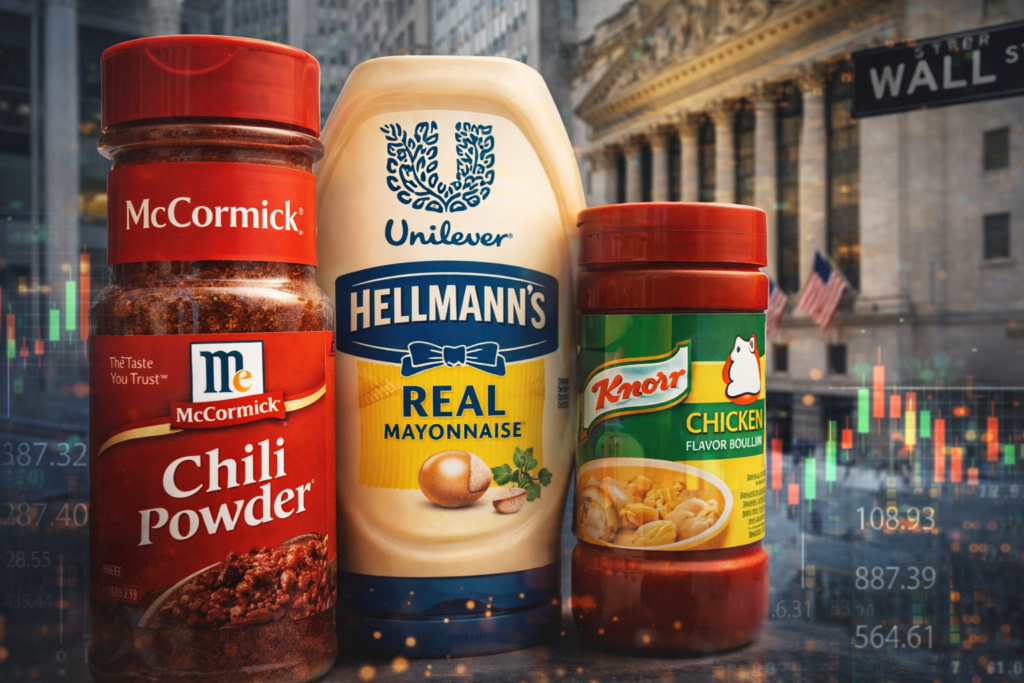 A spice rack is not supposed to feel like a market-moving asset. Yet on March 31, 2026, McCormick and Unilever made flavor a real Wall Street conversation. Their deal to combine Unilever’s foods business with McCormick was valued at about… Leia mais: Why McCormick and Unilever Put Flavor on Wall Street
 - Private Credit Stress Is Getting Visible
 For a long time, private credit’s biggest danger was that you could not see it clearly. That was the trade. Investors got higher yields, smoother marks, and less daily market noise. In return, they accepted opaque portfolios, illiquid structures, and… Leia mais: Private Credit Stress Is Getting Visible
Why businesses may start passing this through faster
The next question is practical: do companies eat these costs, or do they pass them on?
Recent evidence says more of them may pass them on. Reuters reported that S&P Global’s March survey showed businesses paying more for inputs and charging higher prices for goods and services, blaming soaring energy costs and supply-chain disruptions. A separate Reuters report on March 24 said U.S. business activity slipped to an 11-month low in March while input-price inflation hit a 10-month high and private-sector employment weakened. That is an ugly combination because it looks a lot like stagflation lite: slower growth paired with rising price pressure.
This is where imported inflation becomes more dangerous. If companies were enjoying strong productivity gains or fat margins everywhere, they might absorb more of the pressure. But that cushion has already started looking thinner. Once firms begin seeing higher costs for imported energy, industrial materials, machinery, or food inputs, many will either raise prices or accept weaker margins. Neither outcome is great for investors.
Reuters also pointed out that the war-related strain comes on top of tariffs that businesses have been gradually passing through already. That makes this moment especially uncomfortable. Imported inflation is not replacing tariff pressure. It is stacking on top of it.
What this means for stocks
Stocks do not hate inflation equally.
Some sectors can live with imported inflation better than others. Energy and some materials names may benefit when commodity prices jump. Certain industrial companies with pricing power can sometimes keep up too. But broad equity indexes usually struggle when inflation risk revives because it pushes investors to question the whole “multiple plus earnings” story.
That is the real market warning here. Imported inflation can hurt both sides of the stock equation at once. First, it threatens margins for companies that rely on imported inputs. Then it threatens valuations by making the Fed more cautious and long-term yields less friendly. A market that could tolerate slower disinflation becomes much more fragile when it has to price in re-accelerating goods pressure from abroad.
It also complicates the sector rotation already underway. Investors have been moving toward cash, short-duration bonds, value stocks, and inflation-resistant sectors because they no longer trust the easy soft-landing script. A fresh imported inflation warning reinforces that behavior. It tells markets to stay selective, not relaxed.
What it means for households
This story eventually reaches regular households the same way most inflation stories do: slowly, then all at once.
Fuel gets more expensive first. Then transport costs show up in other places. After that, imported food ingredients, industrial materials, apparel, household goods, and machinery start pushing more cost through the system. If the shock lasts, families do not just notice it at the pump. They notice it in groceries, delivery fees, home projects, and everyday goods that quietly cost more than they did a month earlier.
That is why the report matters beyond markets. Imported inflation is one of the fastest ways a global shock lands in an American household budget. And because it hits necessities first, it usually feels worse than a lot of slower-moving inflation categories.
The bottom line
Imported inflation just sent a new warning because the latest data showed something broader and stronger than markets wanted to see.
U.S. import prices jumped 1.3% in February, the biggest monthly increase since March 2022. Fuel prices surged, but nonfuel import prices also rose 1.1%, with big moves in industrial supplies, capital goods, foods, and consumer categories. The report landed into a market already worried about oil, war risk, and a Fed that says inflation is still elevated and uncertainty remains high.
That is why investors care. This was not just another inflation headline. It was a reminder that foreign cost pressure is back in the pipe, broad enough to matter, and arriving at exactly the wrong time for a market that still wanted easier inflation and easier rates.
HypeBucks
XP of the Day: A 1.3% monthly jump in import prices is not just noise. Annualized, that pace would be a serious inflation problem if it lasted.
Next Move: Look at your last month of spending today and flag the categories most exposed to imported inflation: gas, groceries, household goods, and anything shipped long distance.