

The U.S. consumer in 2026 looks contradictory on purpose.
Americans are uneasy about prices, gasoline, and jobs. Yet they are still showing up at the register, especially for small celebrations and familiar routines. That tension is the story. The National Retail Federation said Easter spending is expected to hit a record $24.9 billion this year, with shoppers budgeting a record $195.59 per person. At the same time, the University of Michigan’s preliminary March consumer sentiment index slipped to 55.5, down from 56.6 in February, while January’s Conference Board consumer confidence reading fell to 84.5, the lowest since May 2014.
That is not a random mismatch. It tells us something important about the 2026 economy: consumers still have spending power in parts of the market, but they do not feel comfortable. In practice, that usually means demand keeps moving, though more selectively, more emotionally, and with much less room for mistakes.
The spending side still looks stronger than the mood
Start with the obvious surprise. Easter is not acting like a holiday under stress.
Reuters reported today that NRF expects Easter spending to rise 5.5% from a year ago to a record $24.9 billion. Candy is still the leading category, with 92% of consumers planning to buy sweets, and NRF said promotions and engaging store displays are helping drive purchases. That matters because it suggests consumers are still willing to spend on affordable rituals even when the broader backdrop feels shaky.
The same pattern shows up beyond Easter. NRF forecast last week that 2026 retail sales will rise 4.4% over 2025 to $5.6 trillion. Its March retail monitor also said February marked another month of sales growth, supported by wage gains and low unemployment, even with winter weather and global uncertainty in the mix. In other words, this is not a consumer who has stopped buying. It is a consumer who is still buying, but with more caution and more selectivity.
Official government data points in the same direction. January retail and food services sales fell 0.2% from December, which was soft, but they were still up 3.2% from a year earlier. January personal consumption expenditures also rose 0.4%, though real spending increased only 0.1%. That is a useful clue: the spending engine is still running, but a lot of the nominal gain is getting eaten by prices rather than translating into a big jump in real buying power.
The mood side looks weak for real reasons
Confidence is not weak because consumers suddenly forgot how to shop.
It is weak because daily life still feels expensive and uncertain. The University of Michigan’s preliminary March survey showed sentiment falling to 55.5, with respondents across income, age, and political groups reporting weaker financial outlooks as gasoline prices rose. Reuters said the average drop in financial outlooks across demographics was 7.5%.
The pressure is easy to understand. A Reuters/Ipsos poll published March 20 found that 55% of Americans said rising gas prices had hurt their household finances at least somewhat, and 21% said the hit was major. The same poll found 87% expected gasoline prices to rise further. When fuel jumps that fast, consumers do not need a recession to feel worse. They feel it on the next fill-up.
Inflation is also still annoying in the categories people feel most often. BLS said February CPI rose 2.4% year over year, while core CPI rose 2.5%. Food was up 3.1% over the year, and food away from home rose 3.9%. So even though inflation is well below its peak, everyday categories are still pressuring budgets. That keeps mood weak even when spending has not fully cracked.
Then there is the job market. February payrolls fell by 92,000, and unemployment held at 4.4%. To be fair, layoffs are not exploding: weekly jobless claims fell to 205,000 for the week ended March 14, according to Reuters. Still, a labor market can be stable without feeling exciting. Consumers notice when hiring slows, when headlines turn more cautious, and when confidence about finding a better job fades.
Read more posts from Nerd XP
Stay up-to-date on the latest news in the world of finance, geek culture, and skills.
- Central Banks Are Spelling Out a Multi-Asset Risk Map
 Most investors still talk about risk one shelf at a time. Stocks are risky. Bonds are defensive. Credit is someone else’s problem. Central banks are telling a different story now. Their latest warnings read less like isolated market commentary and… Leia mais: Central Banks Are Spelling Out a Multi-Asset Risk Map
 - Xbox and Gears Still Have Real Momentum
 For all the talk that Xbox has become too scattered, too platform-agnostic, or too far removed from the old console-war script, today tells a different story. Microsoft just announced that its June 7 Xbox Games Showcase will be followed immediately… Leia mais: Xbox and Gears Still Have Real Momentum
 - TikTok Wants to Be a Lender, Not Just a Platform
 For years, the TikTok story was simple: attention first, ads second, shopping maybe third. That model is changing fast. Reuters reported on March 31 that TikTok is seeking approval from Brazil’s central bank for two licenses that would let it… Leia mais: TikTok Wants to Be a Lender, Not Just a Platform
 - Portfolio Careers Beat the Side-Hustle Fantasy
 For years, people were sold a very specific dream. Start a side hustle. Work nights for a while. Then escape your job, replace your income, and finally control your life. That dream still sounds good. However, real life keeps exposing… Leia mais: Portfolio Careers Beat the Side-Hustle Fantasy
 - Why McCormick and Unilever Put Flavor on Wall Street
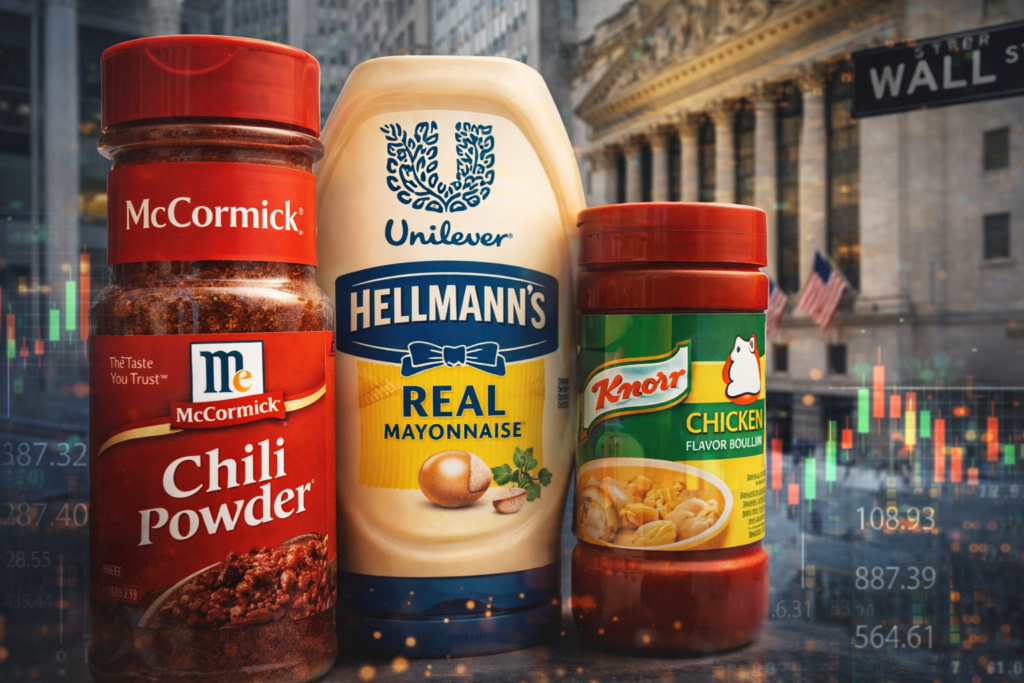 A spice rack is not supposed to feel like a market-moving asset. Yet on March 31, 2026, McCormick and Unilever made flavor a real Wall Street conversation. Their deal to combine Unilever’s foods business with McCormick was valued at about… Leia mais: Why McCormick and Unilever Put Flavor on Wall Street
 - Private Credit Stress Is Getting Visible
 For a long time, private credit’s biggest danger was that you could not see it clearly. That was the trade. Investors got higher yields, smoother marks, and less daily market noise. In return, they accepted opaque portfolios, illiquid structures, and… Leia mais: Private Credit Stress Is Getting Visible
Why both things can be true at the same time
This is the main lesson.
Consumers do not spend based only on how they answer surveys. They spend based on income, habits, seasonality, household balance sheets, and emotional priorities. Reuters noted in January that the relationship between confidence and actual spending has often been weak. So low mood does not automatically mean a spending collapse. It often means people are continuing to buy, but doing it more carefully.
That is especially true for Easter. It is a holiday people can still celebrate without blowing up the monthly budget. Candy, small gifts, brunch, church clothes for kids, and family meals are meaningful, but they usually do not require the kind of financing or big-ticket commitment that a vacation, car, or home project does. That makes Easter one of the easier places for “we are worried, but we are still doing something nice” behavior to show up. The fact that NRF highlighted sales, promotions, and store displays as key drivers reinforces that point.
January spending data also showed the same split in a more technical way. Reuters reported that spending on discretionary services such as restaurants, bars, hotels, clothing, and footwear softened, while healthcare, housing, utilities, food, and some goods spending held up better. That is exactly what a strained but still functioning consumer looks like: necessities and emotionally important purchases survive first, while more optional categories get trimmed.
The consumer is increasingly split by income
There is another reason the spending numbers can stay stronger than the mood numbers: not all households are living the same economy.
Reuters reported in February that the highest-earning 10% of households now account for nearly half of all U.S. consumer spending, citing Moody’s Analytics work based on federal data. The same report described a deepening K-shaped consumer economy, where affluent households keep spending while lower-income and many middle-income shoppers pull back and search for value.
That split matters a lot in 2026. It helps explain why premium brands, travel, and some holiday categories can still look healthy while mass-market and value-stretched consumers sound miserable in surveys. Reuters also noted that in February, University of Michigan sentiment improved most for consumers with the largest stock portfolios while remaining dismal for those without stock holdings. Wealth effects are still doing real work here.
So when you see record Easter spending alongside weak confidence, the cleanest interpretation is not “survey data is broken.” It is “the consumer is fragmented.” Higher-income households still have enough income, assets, and routine spending power to keep aggregate numbers alive. Lower-income households feel the squeeze faster because food, gas, and rent take a bigger share of the check.
What this says about the economy
For the broader economy, this is a resilience story, not a comfort story.
The U.S. consumer is still holding up enough to keep retail spending from rolling over. NRF’s 2026 retail forecast, solid year-over-year sales growth, and record Easter expectations all support that. However, the same consumer is also signaling fatigue through weak confidence, gasoline anxiety, and more cautious discretionary behavior. That is what a late-cycle, pressure-filled expansion often looks like.
It also matters for the Fed. The central bank kept rates at 3.5% to 3.75% on March 18 and said inflation remains somewhat elevated. If households keep spending enough to prevent a sharp slowdown, but prices and energy costs keep pinching budgets, the Fed has less reason to rush into easier policy. That leaves consumers in an awkward middle ground: strong enough to spend, but not comfortable enough to feel good about it.
What investors should watch next
This kind of consumer usually creates winners and losers, not a clean consumer-sector verdict.
Retailers tied to affordable celebrations, loyalty-driven categories, and promotional shopping can still do well. So can companies serving affluent households, because that group continues to drive an outsized share of spending. By contrast, brands exposed to stretched middle- and lower-income shoppers may keep seeing slower volume, more price sensitivity, and heavier discounting pressure.
Investors should also watch whether Easter strength stays in the “small joy” bucket or broadens into more discretionary confidence later in the spring. If gasoline remains high, food inflation stays sticky, and job growth stays sluggish, the mood data may eventually start showing up more clearly in actual spending. If energy pressure eases and wage growth keeps supporting households, this consumer may keep grinding forward longer than the surveys suggest.
The bottom line
Record Easter spending and weak consumer mood are not opposites. They are the same story told from two angles.
Americans in 2026 are still spending because routines, holidays, income growth, and higher-income household strength are keeping demand alive. They feel bad because gas prices are biting, inflation is still too visible, and the labor market no longer feels easy. That is why Easter can hit a record even while confidence stays depressed.
The takeaway is simple: the consumer is not broken, but it is stressed. And stressed consumers can keep the economy moving for a while, just not with the same breadth, confidence, or margin for error.
HypeBucks
XP of the Day: A record $195.59 Easter budget does not prove consumers feel great. It proves many households still protect small traditions even when confidence is weak.
Next Move: Review your last 30 days of spending and tag every purchase as need, routine, or comfort—then see which category is quietly growing.