

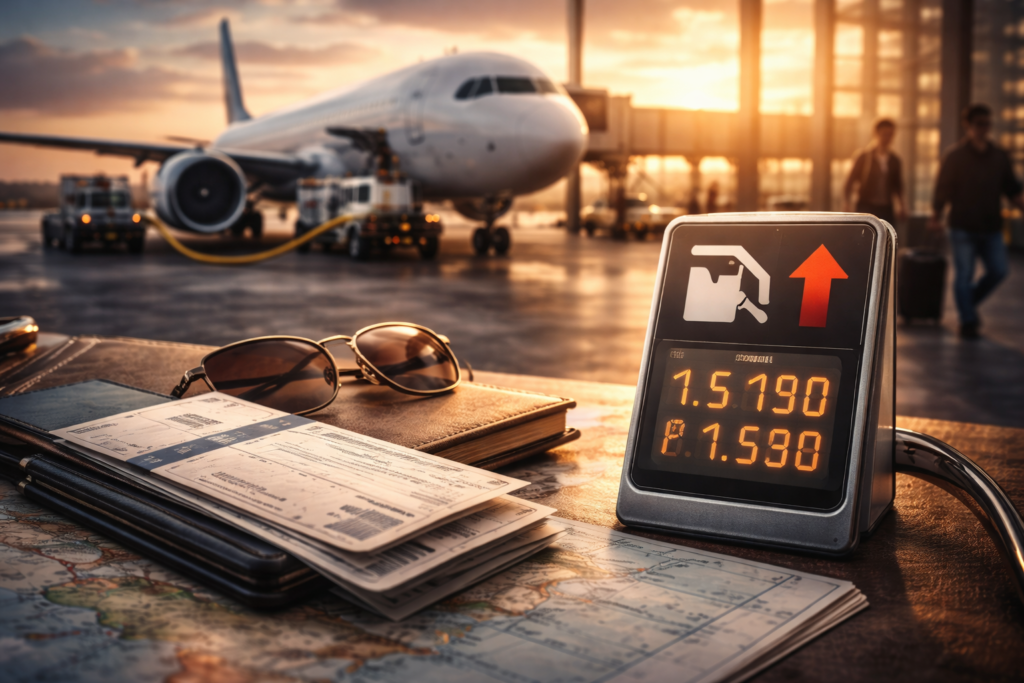
For a while, the oil shock looked like a macro problem that travelers would feel later. That is no longer true. As of April 7, airlines were already raising bag fees, adding fuel surcharges, hiking fares, cutting flights, and changing fuel-loading plans because the squeeze in oil and jet fuel had moved from futures charts into real operations. Reuters reported that airlines across Asia are trimming schedules, carrying extra fuel, and adding refueling stops, while Delta said it would raise checked-bag fees and Air New Zealand said it would hike fares and slash flights through May and June.
That is the key change. This is not just “energy prices are high.” It is “travel is already more expensive and less convenient.” Reuters’ April 2 industry roundup showed carriers around the world responding in real time: Air France-KLM planned to raise long-haul ticket prices by 50 euros per round trip, Cathay Pacific lifted fuel surcharges by 34% on routes from April 1, Thai Airways said it would raise fares 10% to 15%, and multiple Asian carriers introduced or increased fuel surcharges.
Why flights feel oil shocks so fast
Airlines can absorb only so much of a fuel spike before it starts showing up in what passengers pay. Reuters reported that jet fuel had surged from roughly $85 to $90 per barrel before the February strikes on Iran to about $209 per barrel globally, citing IATA. In the same Reuters roundup, the industry noted that fuel can account for up to a quarter of airline operating expenses. When one cost bucket that large more than doubles, it does not stay hidden for long.
This shock is also nastier than a normal oil spike because it is not only a price story. Reuters reported that Iran’s closure of the Strait of Hormuz cut off nearly 21% of global seaborne jet fuel supply, according to Kpler, and that this episode is constraining physical supply, not just lifting market prices. In plain English, airlines are not only paying more for fuel. In some places, they are also worrying about getting enough of it at all.
That is why the operational changes are so visible. Reuters said carriers in Asia are now “tankering,” meaning they load extra fuel at home airports, add refueling stops, or carry less cargo to manage shortages and restrictions abroad. Those workarounds are expensive on their own, because carrying extra fuel increases fuel burn. So even before an airline posts a new fare, the cost base is already moving against the traveler.
The pass-through to travelers is already happening
In the United States, the clearest early sign is not always the base fare. It is ancillary fees. Reuters reported on April 7 that Delta will raise checked-bag fees by $10 for the first and second bags and by $50 for a third bag, taking those charges to $45, $55, and $200. Reuters also said Delta’s move followed similar actions by United and JetBlue, as carriers try to offset sharply higher jet fuel costs without leaning only on headline ticket prices.
Outside the U.S., the pass-through is even more direct. Reuters reported that Air New Zealand would slash flights across May and June and hike fares after jet fuel costs more than doubled, affecting about 4% of flights and 1% of passengers. In Reuters’ April 2 roundup, AirAsia X said it had cut 10% of flights across the group and imposed a roughly 20% fuel surcharge, while Pakistan International Airlines raised domestic fares by $20 and international fares by up to $100 because of higher fuel surcharges.
Asia is showing the broadest and fastest price pressure. Reuters reported that China Eastern raised domestic fuel surcharges from April 5, IndiGo added charges on domestic and international flights from March 14, Greater Bay Airlines raised fuel surcharges on most routes from April 1, and Hong Kong Airlines lifted some surcharges by as much as 35% from March 12. This is not one airline exploiting a news cycle. It is a pattern across markets.
The pain is also showing up in smaller, more exposed travel markets. Reuters reported on April 1 that Nepal sharply raised aviation-fuel prices to avoid supply disruption, with domestic jet-fuel prices up 97.6% and domestic airfares rising by as much as 50%. That is a reminder that when fuel access becomes the issue, not just fuel price, airfare pressure can hit quickly and hard.
Read the latest posts from Finance XP
News about economics, investments, politics, and everything that can affect your portfolio, at Nerd XP.
- BlackRock vs. QQQ Is a Smart Retail-Investing Story
 Most ETF stories are boring on purpose. A firm files a fund, the market shrugs,… Leia mais: BlackRock vs. QQQ Is a Smart Retail-Investing Story
 - The Oil Shock Is Hitting Flights and Travel Costs Now
 For a while, the oil shock looked like a macro problem that travelers would feel… Leia mais: The Oil Shock Is Hitting Flights and Travel Costs Now
 - Private Credit Just Took a Fresh Ratings Hit
 Private credit just took a fresh ratings hit, and this one matters because it lands… Leia mais: Private Credit Just Took a Fresh Ratings Hit
It is not just more expensive. It is less convenient too.
Higher travel costs are only half the story. Travelers are also paying in flexibility, route choice, and reliability. Reuters reported that Vietnam Airlines cut 23 domestic flights per week to conserve fuel, Batik Air Malaysia slashed domestic capacity by 36%, and some carriers in Myanmar suspended domestic flying for part of March because of shortages. Air India was even making refueling stops in Kolkata on a Yangon-Delhi route because of fuel constraints at Yangon airport.
That matters because fewer flights can support higher fares even if demand cools a little. Reuters said flight cancellations in Asia have reduced April jet-fuel demand by only about 50,000 to 100,000 barrels per day, while roughly 400,000 barrels per day of regional jet-fuel output tied to Hormuz-linked crude has been affected since the crisis began. In other words, capacity cuts have not come close to fully offsetting the supply hit. That keeps pressure on both pricing and availability.
Even where airlines are not canceling aggressively, they are preparing for a longer squeeze. Reuters reported that United is cutting unprofitable flights over the next two quarters as it prepares for oil to remain above $100 through the end of 2027, and that the carrier has been able to raise fares without materially hurting bookings. That last detail matters a lot. If demand stays resilient enough for airlines to pass costs through, travelers should not assume today’s fee hikes are a short-lived blip.
Why this matters for summer travel budgets
The obvious hit is airfare. However, the total travel bill is what is getting uglier. Bag fees are rising. Fuel surcharges are back in more markets. Some carriers are folding routes together or reducing frequencies. Meanwhile, if an airline carries extra fuel, adds a stop, or loses schedule flexibility, that usually shows up somewhere in the economics of the trip. Reuters’ airline roundup and April 7 travel coverage both point to the same conclusion: passengers are getting hit by both price increases and degraded service options.
The U.S. may feel this differently than Asia, but not necessarily more gently. Reuters said Asia, Europe, and Africa are most exposed because the U.S. has more domestic supply. Even so, U.S. travelers are already seeing ancillary fees climb, and global route economics still matter for international travel, airline margins, and peak-season pricing. A traveler flying from New York to Los Angeles may feel the shock through bags and tighter pricing discipline; a traveler crossing the Pacific or heading into fuel-strained markets may feel it through fares, surcharges, or reduced options.
There is also a timing problem. This is arriving while demand has not fully cracked. Reuters reported that fare increases needed to cover fuel costs are already deterring some price-sensitive travelers, but that cancellations still have not reduced demand enough to match the fuel shortfall. That is the kind of imbalance that keeps travel prices sticky. Airlines do not need every seat filled to hold the line on higher pricing. They just need enough demand to prevent discounting from coming back.
Read the latest posts from Nerd XP
Stay up-to-date on the latest news in the world of finance, geek culture, and skills.
- BlackRock vs. QQQ Is a Smart Retail-Investing StoryMost ETF stories are boring on purpose. A firm files a fund, the market shrugs,… Leia mais: BlackRock vs. QQQ Is a Smart Retail-Investing Story
- Xbox’s New Game Pass Wave Is Today’s Cleanest Topic
 Sometimes the best gaming story of the day is not the loudest one. It is… Leia mais: Xbox’s New Game Pass Wave Is Today’s Cleanest Topic
 - The Oil Shock Is Hitting Flights and Travel Costs NowFor a while, the oil shock looked like a macro problem that travelers would feel… Leia mais: The Oil Shock Is Hitting Flights and Travel Costs Now
- The Resume Is Losing Ground to Show-Your-Work Hiring
 A lot of job seekers are starting to feel the same thing: the resume still… Leia mais: The Resume Is Losing Ground to Show-Your-Work Hiring
 - Private Credit Just Took a Fresh Ratings HitPrivate credit just took a fresh ratings hit, and this one matters because it lands… Leia mais: Private Credit Just Took a Fresh Ratings Hit
- Super Mario Galaxy Is Still the Biggest Geek Story
 A week after The Super Mario Galaxy Movie opened on April 1, 2026, Super Mario… Leia mais: Super Mario Galaxy Is Still the Biggest Geek Story
What travelers and investors should watch next
First, watch physical jet-fuel supply, not just Brent crude. Reuters’ most useful reporting here is on the operational side: export curbs, rationing, tankering, and refueling stops. If those begin to ease, travel costs may stabilize even before crude fully cools. If they worsen, the travel squeeze can intensify even without another dramatic move in headline oil prices.
Next, watch whether U.S. airlines keep leaning on fees rather than base fares. Reuters has already shown the pattern with Delta, and the earlier industry roundup showed United and JetBlue moving in the same direction. That strategy matters because ancillary-fee inflation can make travel feel more expensive even when the advertised fare looks less dramatic. Families and budget travelers usually feel that first.
Finally, watch route cuts and capacity discipline into late spring and summer. Air New Zealand has already cut flights through May and June, SAS canceled 1,000 April flights, and Ryanair said prolonged supply risk in June, July, or August could force wider capacity reductions. That does not guarantee a global summer travel crunch. It does mean the shock has already crossed the line from theory into scheduling decisions.
The bottom line
The oil shock is hitting flights and travel costs now because airlines are no longer waiting to see whether fuel markets calm down. They are already raising checked-bag fees, adding or increasing fuel surcharges, lifting fares, reducing capacity, and changing how they fuel aircraft. Reuters’ April 7 and April 2 reporting makes that unmistakable. This is already in the traveler’s wallet, not just the strategist’s spreadsheet.
For regular readers, the practical takeaway is simple. Do not think of this as “an oil story” anymore. Think of it as a travel-budget story with energy underneath it. Once airlines start changing fees, schedules, and route economics in response to fuel stress, the pass-through has already begun.
HypeBucks
XP of the Day: A $10 bag-fee hike plus a modest fare increase can quietly add $50 to $150 to a family trip faster than most travelers expect.
Next Move: Spend 10 minutes pricing your next flight twice—once with only the base fare and once with bags, seat selection, and change flexibility added in.