

Everybody wants the secret.
People imagine self-made millionaires must have some hidden mindset hack, a perfect stock tip, or a brutal 5 a.m. routine that regular humans cannot copy. The real answer is less cinematic. Most self-made millionaires get there through a few repeatable patterns: they create room between income and spending, they buy assets early and often, they keep some ownership upside, and they let time do a lot of the heavy lifting. Federal Reserve data backs that up far better than internet folklore does.
One honest caveat matters before we go further. “Self-made” does not mean everybody starts from the same square on the board. Federal Reserve research shows inheritances, family support, and access to resources differ sharply across households. For example, in the 2019 SCF, nearly 30% of White families reported receiving an inheritance or gift, versus about 10% of Black families and 7% of Hispanic families. Still, a 2025 Fed paper using the 2022 SCF found that inheritances did not appear to play a measurable role in the elevated wealth-to-earnings ratios of high-lifetime-earning families. In other words, starting points are unequal, but long-run saving and asset ownership still matter a lot.
Here, when I say “self-made millionaire,” I mean someone who built wealth mainly through earnings, ownership, and investing rather than inheriting a fortune. With that definition in mind, the common traits look surprisingly practical.
They spend less than they earn for a long time
This sounds obvious. It is also where almost everything starts.
The Federal Reserve’s 2024 SHED found that 51% of adults spent less than their income in the prior month. More important, people who regularly had money left over were dramatically more likely to have real financial resilience: 85% of adults who always had money left over said they had savings to cover three months of expenses, versus just 13% of those who never had money left over. The pattern is even clearer in the SCF: 82% of families in the top decile of the income distribution reported that their spending was less than their income in 2022.
That is the first shared trait. Self-made millionaires usually protect a gap.
Not a glamorous gap. Not a viral-social-media gap. Just a consistent surplus that can be directed into savings, investing, debt payoff, or a business. Without that gap, wealth building has no fuel. A high income helps, of course. However, a high income with no margin is just an expensive lifestyle wearing a nice suit.
They turn that surplus into assets, not just comfort
A lot of people earn decent money. Far fewer convert that money into things that compound.
The Fed’s 2022 Survey of Consumer Finances shows what that compounding path tends to look like. Overall, 54.3% of families held retirement accounts, 58% held stock directly or indirectly, and 66.1% owned a primary residence. Among families in the top decile of the income distribution, 95% held stock directly or indirectly. For working families ages 35 to 64, the mean balance in IRA and defined-contribution retirement accounts reached $913,300 in the top decile. That is not a lottery story. That is an ownership story.
This is one of the biggest things self-made millionaires have in common: they own pieces of things.
Sometimes that means index funds in a 401(k). Sometimes it means a Roth IRA, taxable brokerage account, home equity, or rental property. Often it means more than one of those. The form can vary. The pattern does not. They do not rely only on earned income. They build a second engine through assets that can rise in value, spin off cash flow, or both.
That is also why so many wealth builders sound boring when they explain their process. “I invested every month” is not exciting. It is just effective.
Recommended by Nerd XP
This content may contain affiliate links. If you purchase through them, Nerd XP may receive a commission at no extra cost to you.
I’ve selected 6 items that can truly help you level up your XP, focusing on usefulness, cost-effectiveness, and real-world user experience.
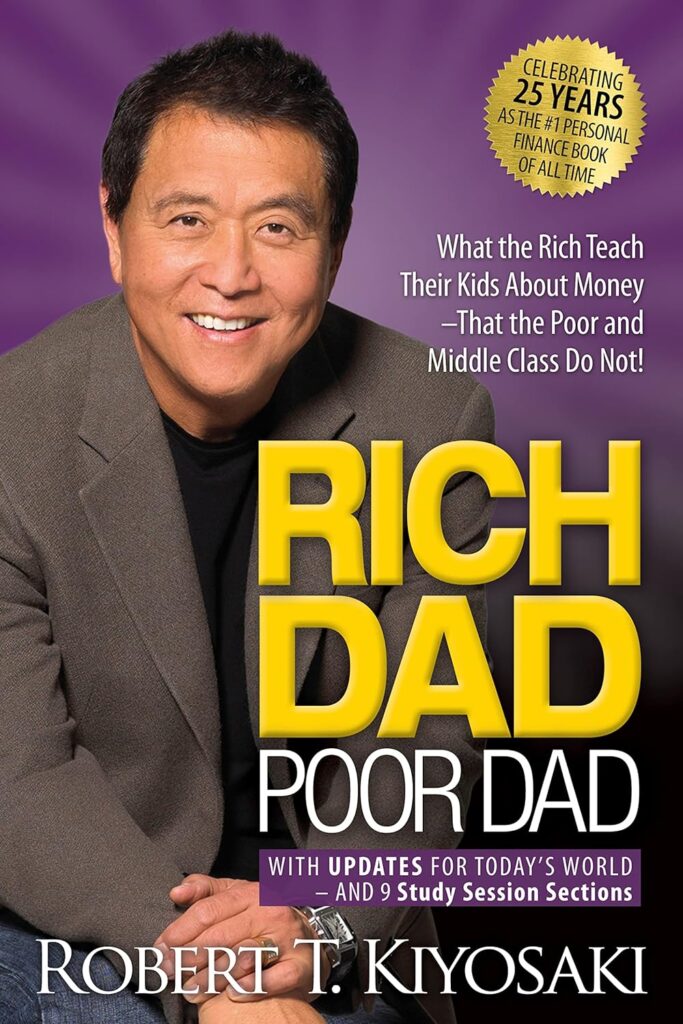
Rich Dad Poor Dad
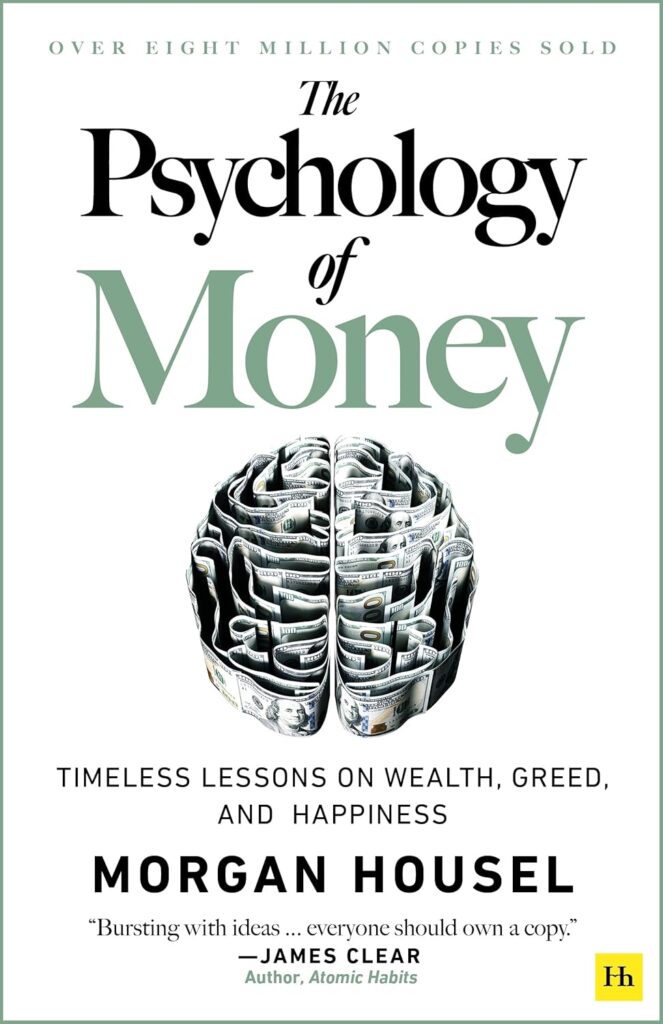
The Psychology of Money
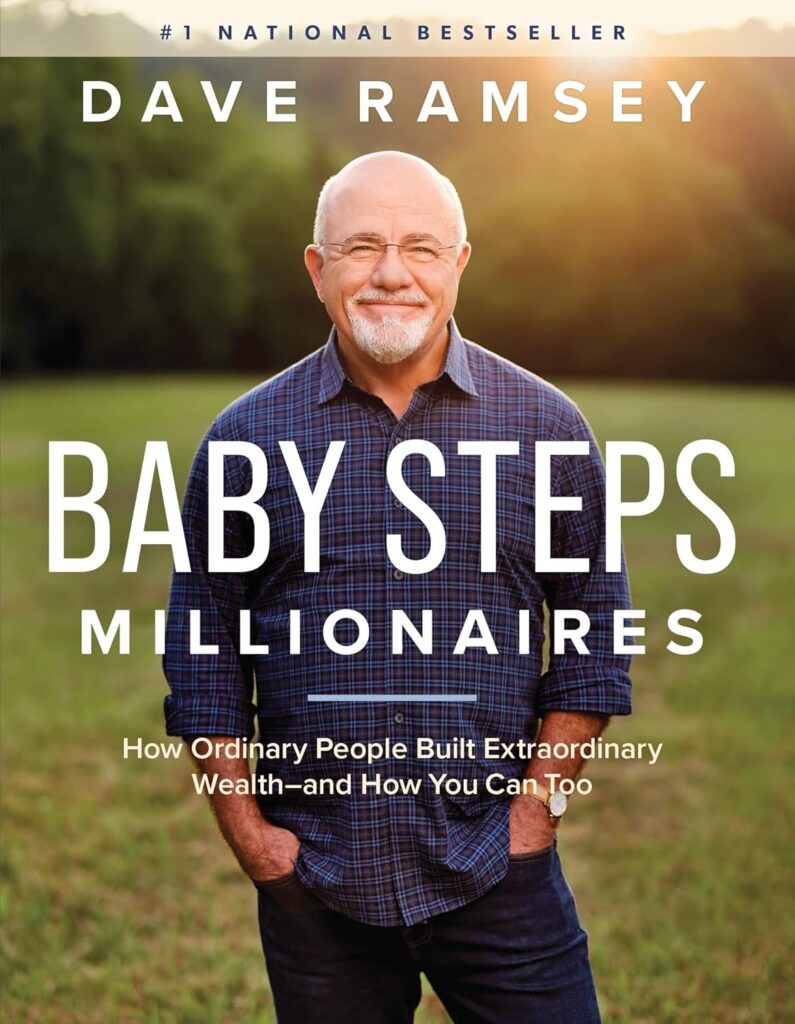
Baby Steps Millionaires
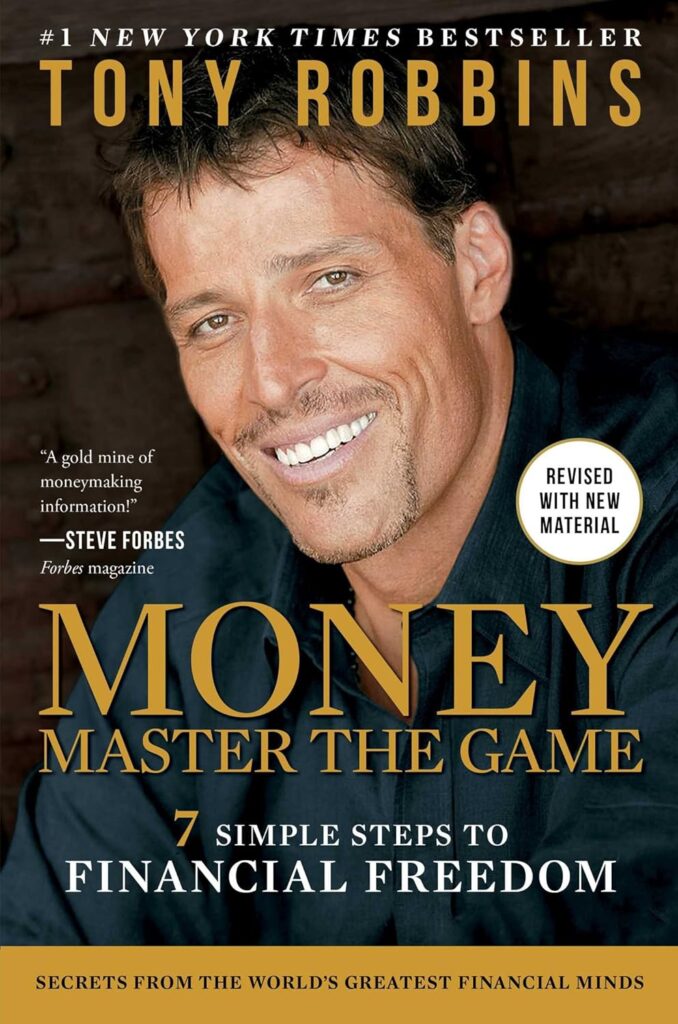
MONEY Master the Game
Richest Man in Babylon
Make Your Bed
Many of them have some ownership upside
Not every self-made millionaire owns a business. Still, a lot more of them have ownership exposure than people realize.
In the 2022 SCF, 20% of all families owned a privately held business, the highest level on record in the modern survey, and nearly half of families in the top income decile owned a business. Business-owning families were wealthier even before counting the business itself. Families without a business had mean net worth of about $566,100. Families with a nonemployer business had mean net worth of about $1.07 million excluding business value, while families with businesses employing more than five people had mean net worth above $4 million excluding business value.
That matches broader research on how wealth gets built at the top. An NBER paper using tax data linked to 11 million firms found that entrepreneurs are central to understanding top U.S. incomes, and that most top business income comes from pass-through firms owned by working-age business owners. Over 69% of the top 1% earned some pass-through business income in 2014.
The practical takeaway is not “go quit your job and found a startup tomorrow.” It is simpler than that. Self-made millionaires often create some form of upside that is not capped like a paycheck. That could be a business, partnership, equity compensation, a side practice, a small acquisition, or even a scalable freelance operation. Salary matters. Ownership changes the game.
They use retirement accounts and tax advantages instead of trying to look clever
Another common trait is that they do not ignore the boring tools.
The 2022 SCF says retirement-plan participation rose across the income distribution and reached its highest level since 2010. The 2024 SHED also found that 61% of non-retirees had a tax-preferred retirement account, while 35% said their retirement savings plan was on track. Those are not perfect numbers, but they show where durable wealth tends to live in America: inside tax-advantaged accounts and long-term market exposure, not in constant trading.
This matters because self-made wealth is usually built more by system design than by brilliance.
A person who maxes or steadily funds a 401(k), grabs an employer match, adds to a Roth IRA when eligible, and stays invested through multiple cycles is running a much stronger build than someone chasing hot picks on social media. The Fed’s 2025 paper on saving behavior found that wealth-to-lifetime-earnings ratios rise sharply in the top decile and remain higher even after stripping out capital gains. That suggests the story is not just “the rich got lucky with markets.” It is also that they saved more and kept more of what they earned over time.
They usually build earning power, then keep more of it
Income is not wealth. However, income still matters because it gives you more capacity to save and invest.
The Federal Reserve’s SHED shows adults with family income of $100,000 or more were much more likely to spend less than their income than lower-income households, and they were also far more likely to have savings covering three months of expenses. The SCF shows something similar from another angle: families with a college degree had about twice the median income of families with some college, but more than three times the median net worth. That gap tells you something important. Wealth is not created by income alone. It is created by the conversion of income into assets.
That is a pattern worth remembering because many people make a subtle mistake here. They focus on raising income, which is smart, but never upgrade the systems that protect the extra cash. Then the bigger paycheck becomes a bigger car payment, pricier rent, more subscriptions, and nicer vacations. The visible standard of living rises. Net worth barely moves.
Self-made millionaires usually do the opposite. They raise earning power and keep a meaningful share of the upgrade.
They let time do what hustle cannot
This may be the least exciting trait and the most powerful one.
The SCF shows top-decile families had median net worth of $3.79 million in 2022. That kind of number rarely comes from one dramatic move. It usually comes from years of repeated decisions: saving when it is boring, investing when headlines look ugly, staying in the market long enough to benefit from compounding, and holding assets through multiple cycles. Meanwhile, the Fed’s saving paper found the wealth-to-lifetime-earnings ratio was fairly flat through most of the distribution, then climbed meaningfully in the top decile and especially the top 2%. That is exactly what you would expect if time, consistency, and asset ownership start compounding on each other.
That is also why “get rich quick” content usually misses the point. Self-made millionaires often look less like gamblers and more like patient builders. They treat wealth like an upgrade path, not a jackpot.
Read more posts from Nerd XP
Stay up-to-date on the latest news in the world of finance, geek culture, and skills.
- Central Banks Are Spelling Out a Multi-Asset Risk Map
 Most investors still talk about risk one shelf at a time. Stocks are risky. Bonds are defensive. Credit is someone else’s problem. Central banks are telling a different story now. Their latest warnings read less like isolated market commentary and… Leia mais: Central Banks Are Spelling Out a Multi-Asset Risk Map
 - Xbox and Gears Still Have Real Momentum
 For all the talk that Xbox has become too scattered, too platform-agnostic, or too far removed from the old console-war script, today tells a different story. Microsoft just announced that its June 7 Xbox Games Showcase will be followed immediately… Leia mais: Xbox and Gears Still Have Real Momentum
 - TikTok Wants to Be a Lender, Not Just a Platform
 For years, the TikTok story was simple: attention first, ads second, shopping maybe third. That model is changing fast. Reuters reported on March 31 that TikTok is seeking approval from Brazil’s central bank for two licenses that would let it… Leia mais: TikTok Wants to Be a Lender, Not Just a Platform
 - Portfolio Careers Beat the Side-Hustle Fantasy
 For years, people were sold a very specific dream. Start a side hustle. Work nights for a while. Then escape your job, replace your income, and finally control your life. That dream still sounds good. However, real life keeps exposing… Leia mais: Portfolio Careers Beat the Side-Hustle Fantasy
 - Why McCormick and Unilever Put Flavor on Wall Street
 A spice rack is not supposed to feel like a market-moving asset. Yet on March 31, 2026, McCormick and Unilever made flavor a real Wall Street conversation. Their deal to combine Unilever’s foods business with McCormick was valued at about… Leia mais: Why McCormick and Unilever Put Flavor on Wall Street
 - Private Credit Stress Is Getting Visible
 For a long time, private credit’s biggest danger was that you could not see it clearly. That was the trade. Investors got higher yields, smoother marks, and less daily market noise. In return, they accepted opaque portfolios, illiquid structures, and… Leia mais: Private Credit Stress Is Getting Visible
What readers can actually copy
You probably cannot copy someone else’s exact income, timing, career, or opportunities. You can copy the architecture.
First, create margin. A budget does not need to be beautiful. It needs to make saving automatic.
Next, buy assets on a schedule. Retirement accounts, broad-market index funds, cash reserves, and home equity are not flashy. They are functional.
Then, look for some ownership upside. That might be negotiating equity, building a side income stream, or growing a small business that can earn without every dollar being tied to every hour.
Finally, defend the gap when income rises. That is where a lot of future millionaires quietly separate themselves from future high earners who stay broke-looking on paper.
The bottom line
Self-made millionaires are usually less mysterious than people hope.
They tend to save consistently, own appreciating assets, use retirement accounts well, protect themselves from lifestyle creep, and, in many cases, build some form of business or ownership upside. The Federal Reserve data does not point to a magic personality type. It points to a repeatable financial pattern: create margin, keep buying assets, and stay in the game long enough for compounding to matter.
That is good news, because it means the path is not reserved for geniuses.
It is mostly reserved for people who can keep making strong decisions after the first few strong decisions stop feeling exciting.
HypeBucks
XP of the Day: Saving 20% of a $75,000 income puts away $15,000 a year before growth, which is a much stronger wealth engine than chasing one lucky stock pick.
Next Move: Open your banking app today and set one automatic transfer, even if it is only $25 a week, into savings or investing.