
Marvel quietly made one of its most revealing TV decisions of 2026 on March 23. Wonder Man is officially coming back for Season 2, with Yahya Abdul-Mateen II, Ben Kingsley, Destin Daniel Cretton, and Andrew Guest all returning. On the surface, that sounds like a simple renewal story. It is bigger than that. This is Marvel telling us which kind of Disney+ show it now believes in enough to continue: smaller, stranger, more character-driven, and actually built to behave like television instead of a two-part movie with credits breaks.
That is why the headline matters. Wonder Man was not one of Marvel’s safest bets. It was a Hollywood-set dramedy about Simon Williams trying to become both a real actor and a fake in-universe superhero icon, while building an unlikely bond with Trevor Slattery. TheWrap notes that the series was originally slated as a miniseries, then got renewed after strong word-of-mouth and audience response. In other words, Marvel did not extend a giant flagship. It extended the weird one. That says a lot about what the studio’s TV side finally seems to understand.
This renewal matters because Marvel does not do this often
One reason the renewal lands so hard is scarcity. Marvel has been much better at launching Disney+ projects than sustaining them. TheWrap points out that Wonder Man joins a very small group of live-action MCU shows that actually get follow-up seasons, with Loki and Daredevil: Born Again being the main company it keeps. Even the search result coverage from The Hollywood Reporter framed that rarity as part of the story. So when Marvel gives Wonder Man another season, it is not just saying “good job.” It is saying this world is durable enough to keep living on TV.
That is a more meaningful signal than a one-season launch ever was. For a long time, Marvel’s streaming model behaved like a satellite system for the movies. Big names came in, did one premium-limited-series run, and moved back into the larger MCU machine. Brad Winderbaum has now been pretty direct that the company is trying to move away from that. In February 2025, he said Marvel wants to create television “for television,” with shows that can run season over season, maybe on an annual schedule, and only proceed when the story can sustain multiple seasons. He also told ComicBook that Marvel is now “making shows as shows” that can exist as annual releases, “more like television.” That is not subtle. It is a philosophy change.
Wonder Man works because it feels like a real TV show
The funny part is that Wonder Man was not even born as the perfect symbol of the new model. According to Disney+, all eight episodes dropped at once on January 27, 2026, which still feels closer to the old streaming habit of unloading a whole project and moving on. Even so, the actual show felt much more like television than many of Marvel’s earlier Disney+ swings. Rotten Tomatoes currently lists Season 1 at 91% with critics and 87% with audiences. Reviews highlighted exactly the qualities Marvel should want more of: a self-contained story, lower stakes, and an identity strong enough to stand on its own. Variety called it a “refreshingly low-stakes” Marvel show, The Guardian praised it for having almost no superhero action and being better for it, and The Ringer described it as a “self-contained MCU unicorn.”
That matters because “low stakes” is not the same as “low value.” Wonder Man focused on Simon and Trevor, on ego and friendship, on performance and identity, and on the absurdity of trying to survive Hollywood while hiding something huge about yourself. TheWrap noted that the show focuses almost entirely on Abdul-Mateen and Kingsley’s relationship and Hollywood exploits, with superheroics rarely entering the picture. That is exactly why it stood out. Marvel TV has often looked most confident when the frame gets smaller and the character gets clearer.
It also fits the promise behind Marvel Spotlight better than a lot of people expected. In Disney’s 2024 explanation of the banner, Winderbaum said Spotlight exists to bring “more grounded, character-driven stories” to the screen and to signal that there is “no homework required.” He described those shows as complete meals in themselves, not mandatory steps on the road to some later event. That language now reads like a blueprint for why Wonder Man clicked. You did not need to study three phases of MCU lore to understand Simon Williams. You just needed to buy into the tone.
Read more posts from Nerd XP
Stay up-to-date on the latest news in the world of finance, geek culture, and skills.
- Central Banks Are Spelling Out a Multi-Asset Risk Map
 Most investors still talk about risk one shelf at a time. Stocks are risky. Bonds are defensive. Credit is someone else’s problem. Central banks are telling a different story now. Their latest warnings read less like isolated market commentary and… Leia mais: Central Banks Are Spelling Out a Multi-Asset Risk Map
 - Xbox and Gears Still Have Real Momentum
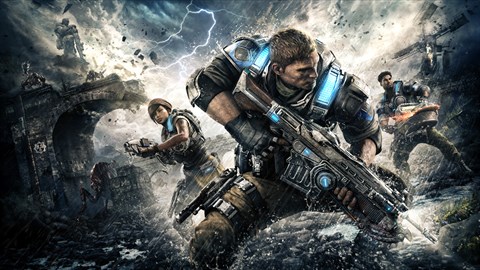 For all the talk that Xbox has become too scattered, too platform-agnostic, or too far removed from the old console-war script, today tells a different story. Microsoft just announced that its June 7 Xbox Games Showcase will be followed immediately… Leia mais: Xbox and Gears Still Have Real Momentum
 - TikTok Wants to Be a Lender, Not Just a Platform
 For years, the TikTok story was simple: attention first, ads second, shopping maybe third. That model is changing fast. Reuters reported on March 31 that TikTok is seeking approval from Brazil’s central bank for two licenses that would let it… Leia mais: TikTok Wants to Be a Lender, Not Just a Platform
 - Portfolio Careers Beat the Side-Hustle Fantasy
 For years, people were sold a very specific dream. Start a side hustle. Work nights for a while. Then escape your job, replace your income, and finally control your life. That dream still sounds good. However, real life keeps exposing… Leia mais: Portfolio Careers Beat the Side-Hustle Fantasy
 - Why McCormick and Unilever Put Flavor on Wall Street
 A spice rack is not supposed to feel like a market-moving asset. Yet on March 31, 2026, McCormick and Unilever made flavor a real Wall Street conversation. Their deal to combine Unilever’s foods business with McCormick was valued at about… Leia mais: Why McCormick and Unilever Put Flavor on Wall Street
 - Private Credit Stress Is Getting Visible
 For a long time, private credit’s biggest danger was that you could not see it clearly. That was the trade. Investors got higher yields, smoother marks, and less daily market noise. In return, they accepted opaque portfolios, illiquid structures, and… Leia mais: Private Credit Stress Is Getting Visible
The smartest lesson is not “make everything like Wonder Man”
Marvel could still learn the wrong lesson from this. The takeaway is not that every Disney+ show should become a meta Hollywood comedy. It is that every show should have a distinct center and enough elasticity to last. Wonder Man has that. It is specific. It has chemistry. It has a voice. And, crucially, its own creators already understand what should not change. In January, before the renewal was official, Cretton told Entertainment Weekly that none of them wanted the series to “suddenly turn into a more typical superhero show” because of where the finale ended. That is exactly the right instinct for Season 2.
Because of that, Season 2 is almost a test case. If Marvel keeps the tone intact, protects the Simon-Trevor dynamic, and resists the urge to inflate the scale just because the renewal happened, then Wonder Man could become the clearest proof yet that Marvel’s TV future depends on identity more than size. TheWrap already reported that the show was renewed because of strong word-of-mouth and audience reception, not because it carried the biggest MCU name on the call sheet. That should be a flashing neon sign for the studio.
There is one place where Marvel should not copy Season 1, though: the binge drop. This is my read, but it follows the company’s own stated strategy. If Winderbaum wants viewers to live with characters “for a long period of time” and wants TV to feel more like TV, then dumping all eight episodes at once works against that goal. Wonder Man earned a second season anyway. Still, Season 2 would be an even stronger expression of Marvel’s new model if it rolled out weekly and let conversation build. That would match the philosophy much better than a one-day upload ever could.
What Marvel TV actually needs
Marvel TV does not need every show to be darker. It does not need every show to be more connected. It definitely does not need more homework. What it needs is simpler and harder: fewer shows, clearer identities, stronger genre commitments, and stories that can justify another season without begging the movies for relevance. Winderbaum’s comments about sustainability and multi-season planning already point in that direction, and Wonder Man getting renewed turns that from theory into evidence.
So yes, Wonder Man Season 2 shows what Marvel TV actually needs. It needs confidence in television as television. It needs characters who can carry a world without borrowing prestige from an Avenger. It needs room for oddball tones, human-scale stakes, and chemistry that feels worth revisiting. Most of all, it needs the courage to keep a good thing weird. That is not just the best lesson Marvel can take from Wonder Man. It may be the only lesson that gives its TV side a real identity again.
NoobMaster
Easter Egg: Before the renewal, Destin Daniel Cretton said he did not want Wonder Man to “turn into a more typical superhero show” in a second season.
Recommendation: Barry — because it nails the same mix of performance anxiety, identity crisis, and darkly funny industry satire that made Wonder Man feel more alive than standard franchise TV.