
Scooby-Doo Is Becoming an Anime. It Makes Sense
Scooby-Doo becoming an anime sounds fake in the exact way modern entertainment news often sounds fake.
Like, this is the kind of headline you would expect to see between “Fast & Furious is getting an isekai” and “Gordon Ramsay joins the Demon Slayer Corps.” It feels designed in a lab to make three generations of cartoon fans blink at the same time.
And yet, somehow, this one actually makes sense.
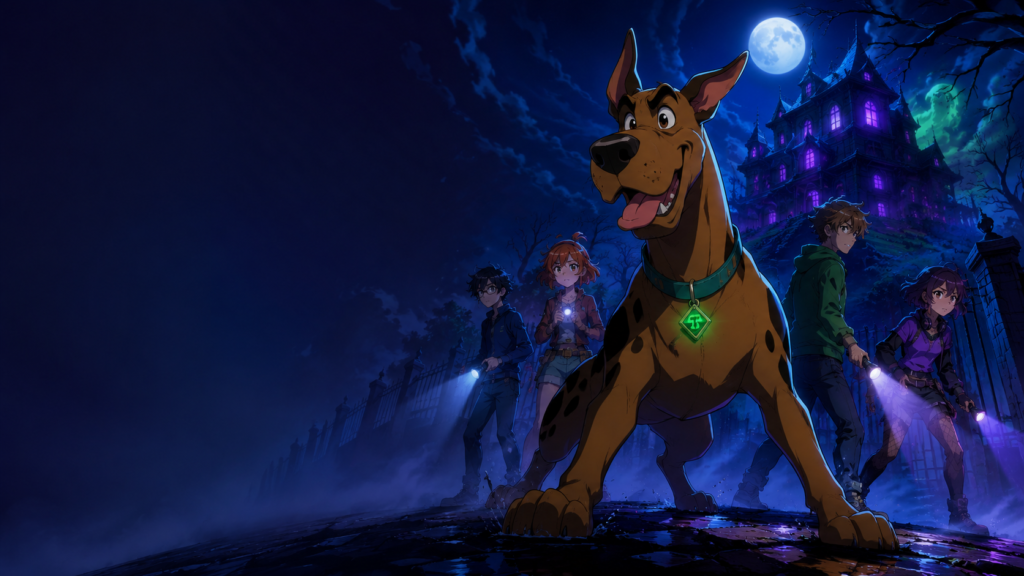
The new project is called Yokoso Scooby-Doo!, and it sends Scooby and Shaggy to Japan for a foodie adventure that quickly turns into supernatural chaos. Tubi has the series for North America, Cartoon Network is set for international distribution, and Warner Bros. Animation is producing with Japanese studio OLM handling animation. Frank Welker and Matthew Lillard are also returning as Scooby-Doo and Shaggy.
That is not a random mashup. That is a suspiciously clean build.
Scooby-Doo has always been about cowards surviving horror scenarios through friendship, snacks, and accidental competence. Anime has an entire power system built around those exact ingredients. Swap the haunted amusement park for Japanese folklore, give Shaggy a bowl of ramen, add a magical girl, and suddenly this is not a gimmick.
It is just Scooby-Doo unlocking a new class.
What Is Yokoso Scooby-Doo?
Yokoso Scooby-Doo! is being positioned as the first original anime series in the Scooby-Doo franchise. The title means “Welcome, Scooby-Doo,” which is already pretty charming in a “please enter the yokai dungeon” kind of way.
The reported premise is simple and very Scooby: Shaggy and Scooby visit Japan for food, accidentally unleash a wave of mythical monsters, and then have to help clean up the chaos. They are joined by Scooby’s uncle Daisuke-Doo, a magical girl named Yume, and a gadget genius named Takumi. Itsuro Kawasaki is listed as director, while Francisco Paredes is involved as producer.
That setup matters because it does not sound like the franchise is only wearing anime cosplay.
It sounds like a Scooby-Doo story rebuilt around anime-friendly mechanics: a travel arc, a new support party, monsters tied to local folklore, and a central duo that already functions like a comedy anime team.
Also, Shaggy and Scooby going to Japan for food is not a stretch. It is practically the most believable Scooby-Doo plot ever written. These two would absolutely cross the Pacific for a perfect bowl of noodles and then accidentally release 300 monsters before dessert.
Why This Matters Right Now
This announcement lands at a time when anime is no longer a niche lane in North America. It is mainstream entertainment, streaming infrastructure, fashion fuel, meme language, and a storytelling style that Hollywood keeps trying to understand without always knowing how to hold the controller.
So when Scooby-Doo goes anime, the question is not “why would they do this?”
The better question is: “Why did it take this long?”
Scooby-Doo is one of the most adaptable American cartoon franchises ever. It has been a mystery show, a comedy, a supernatural adventure, a celebrity crossover machine, a self-aware reboot, a darker serialized mystery, and occasionally a cursed laboratory experiment. Some versions work. Some versions get unmasked and should return to the swamp.
However, the core formula is unusually durable.
A group investigates something spooky. The monster is either fake, misunderstood, or part of a larger mystery. Scooby and Shaggy panic. Their panic somehow becomes useful. The case resolves with a chase, a reveal, and the eternal truth that snacks are a valid survival strategy.
Anime can work with that.
In fact, anime may be one of the cleanest ways to modernize Scooby-Doo without turning it into something embarrassed by itself.
Scooby-Doo Was Already Built Like a Monster-of-the-Week Anime
Before anyone starts power-scaling Scooby Snacks, let’s be honest: classic Scooby-Doo already shares DNA with monster-of-the-week anime.
Every episode introduces a threat. The gang investigates. The setting has a hook. The villain has a design. The chase scene becomes the action set piece. Then the mask comes off, and the mystery resets.
That rhythm is not far from anime series that use episodic monsters to build a larger world.
Think about shows where each creature represents a local legend, emotional wound, urban rumor, or social fear. Scooby-Doo has been doing a kid-friendly version of that forever. The difference is that its monsters usually turn out to be greedy adults in costumes.
That structure is weirdly flexible.
In Japan, the show can pull from yokai, spirits, folklore, festival imagery, haunted landmarks, food culture, and regional legends. Meanwhile, Shaggy and Scooby can remain the emotional center because they are not brave heroes pretending to be cool. They are scared goofballs who keep moving anyway.
That is underrated protagonist energy.
Anime loves a coward who grows. It loves a comic-relief character who accidentally has the best instincts. It loves found-family groups with specialized roles. Scooby-Doo already has all of that. It just usually drives around in a van instead of boarding a bullet train to chase a fox spirit.
Shaggy and Scooby Are Perfect Anime Leads
The smartest part of Yokoso Scooby-Doo! is the focus on Shaggy and Scooby.
Yes, Mystery Inc. is iconic as a full team. Fred has trap leader energy. Daphne is the high-risk charisma build. Velma is the detective brain with maxed-out perception. But Shaggy and Scooby are the soul of the franchise.
They are also the easiest characters to translate into anime.
Why? Because they are expressive, reactive, hungry, and emotionally transparent. Anime thrives on big reactions. Fear faces, hunger faces, panic running, dramatic crying, sudden bravery, and exaggerated physical comedy are all part of the language.
Shaggy and Scooby do not need to be redesigned into stoic action heroes. Please do not give Shaggy a cursed technique called Ultra Instinct Sandwich Mode. The joke works because they are not built for combat.
Their “power” is survival through chaos.
They run. They hide. They improvise. They accidentally solve things. They care about each other. They care about snacks. Occasionally, they care about the mission once they realize everyone else is in real danger.
That emotional simplicity is powerful. It makes them easy to root for, especially in a setting full of larger-than-life monsters.
The Japan Setting Is Not Just a Visual Gimmick
Sending Scooby-Doo to Japan could have been lazy.
The cheap version is obvious: throw in a few neon streets, some sushi jokes, a cherry blossom scene, and call it a day. That would be filler-episode tourism, and nobody needs that.
The stronger version uses Japan as a storytelling engine.
Japanese folklore gives the series access to creatures that are funny, frightening, mischievous, tragic, or morally complicated. That range fits Scooby-Doo better than a purely dark horror approach would.
Scooby-Doo should not suddenly become Jujutsu Kaisen with dog jokes. It should not be grimdark. The franchise works best when the spooky stuff is just scary enough to matter, but playful enough for all-ages fun.
Yokai and mythical monsters can hit that sweet spot.
A monster can be ridiculous and threatening at the same time. A haunted location can be creepy and beautiful. A local legend can become a mystery without requiring the show to abandon comedy.
Meanwhile, the food angle gives Shaggy and Scooby a natural reason to travel. Every new region can bring a new dish, a new creature, and a new mini-mystery. That is not just cute. It is an episode engine.
OLM Is a Big Deal Here
The OLM involvement is one of the biggest reasons this announcement feels more credible than a random brand crossover.
OLM is widely associated with long-running, family-friendly anime production, especially Pokémon, and Anime Corner also notes its connection to The Apothecary Diaries through co-production.
That matters because Scooby-Doo needs animation that can handle comedy timing, creature design, bright adventure, and younger viewers without feeling flat.
This should not look like a prestige seinen thriller. It should look alive. It should move with bounce. The monsters should have personality. Scooby and Shaggy should be able to go from terrified noodle slurp to full chase-scene panic in two seconds.
That kind of tonal elasticity is hard.
A Scooby-Doo anime must feel like anime, but it also has to feel like Scooby-Doo. Push too far in either direction and the balance breaks. Make it too American-cartoon traditional, and fans ask why it needed to be anime. Make it too anime-serious, and Scooby starts looking like he wandered into the wrong convention hall.
OLM gives the project a better shot at finding the middle lane.
Read the latest posts from Geek XP
News, trivia, recommendations, and everything about the geek universe at Nerd XP.
- Scooby-Doo Is Becoming an Anime. It Makes SenseScooby-Doo Is Becoming an Anime. It Makes Sense Scooby-Doo becoming an anime sounds fake in… Leia mais: Scooby-Doo Is Becoming an Anime. It Makes Sense
The Monster Problem: Real, Fake, or Both?
Here is the biggest creative question: what kind of monsters are these?
Classic Scooby-Doo usually ends with a mask coming off. The monster is fake. The real villain is greed, fraud, or some guy named Carl who wanted the amusement park land.
However, Scooby-Doo has also played with real supernatural elements before. Fans know the franchise can survive ghosts, witches, aliens, zombies, and weirder things when the tone is handled correctly.
Yokoso Scooby-Doo! seems to lean toward mythical monsters actually causing trouble. That changes the mystery math.
If the monsters are real, the show cannot rely on the classic “old man in a costume” reveal every episode. Instead, the mysteries may involve how each creature was released, what it wants, who is manipulating the situation, or how the team can contain it.
That could be refreshing.
At the same time, the series should keep some unmasking energy. Scooby-Doo without deception is like a tournament arc with no rival. Something feels missing.
The best version might blend both.
Some monsters are real. Some are fake. Some are misunderstood. Some are being used by humans. Some are just chaotic little freaks who need to be bribed with snacks. That mix would keep the audience guessing while preserving the franchise’s detective roots.
Daisuke-Doo, Yume, and Takumi Could Make or Break It
New Scooby-Doo characters are tricky.
The franchise has a long history of adding side characters, relatives, guest stars, and oddball companions. Some become fan favorites. Others feel like they were summoned by a network executive with a cursed spreadsheet.
So the new supporting cast needs a clear purpose.
Daisuke-Doo, Scooby’s uncle, is immediately funny because the Doo family tree is already a sacred mess. Scooby having yet another relative is not a bug. It is franchise lore doing franchise lore things.
Yume, described as a magical girl, is the most openly anime-coded addition. She could bring transformation sequences, magical tools, emotional stakes, and a different relationship to the supernatural. If handled well, she can bridge Scooby-Doo’s mystery comedy with anime’s bigger visual language.
Takumi, the gadget whiz, sounds like the utility character. That matters because if Fred, Velma, and Daphne are not central, the show still needs brains, tools, and planning. Takumi can fill that mechanical support role without simply being “Velma but new.”
The danger is overcrowding.
The show should not bury Shaggy and Scooby under new lore. The new characters should sharpen the duo, not replace them. Let Scooby and Shaggy stay messy. Let the support cast make the mess solvable.
Why Longtime Scooby Fans Should Care
Longtime fans have reasons to be cautious.
Scooby-Doo reboots can be weird. Sometimes they understand the formula. Sometimes they try to “fix” things that were never broken. Sometimes they remove Scooby from Scooby-Doo, which is like making a cooking anime where nobody eats.
So skepticism is fair.
That said, Yokoso Scooby-Doo! has several encouraging signs.
First, Frank Welker and Matthew Lillard returning gives the project continuity. Lillard’s Shaggy has become deeply tied to the character for modern fans, while Welker is basically part of Scooby-Doo’s source code at this point. Their presence helps the anime feel like a new branch of the franchise rather than a total replacement.
Next, the premise focuses on adventure rather than edgy reinvention. Scooby and Shaggy are not being reimagined as morally gray paranormal mercenaries. They are going to Japan, chasing food, and dealing with monsters. Good. Correct. No notes.
Finally, the anime format gives the franchise room to be visually fresh without pretending Scooby-Doo is not silly.
That is important. Scooby-Doo should be silly. The trick is making the silliness feel intentional, not outdated.
Why Anime Fans Should Not Dismiss It
Anime fans may look at this and think, “Okay, but is this actually for us?”
Fair question.
A Western IP getting an anime version can feel awkward when the project treats anime like a filter instead of a medium. Fans can smell that instantly. You cannot just add speed lines, big eyes, and one magical girl and expect applause.
However, Scooby-Doo is a better fit than many imported franchises because its base formula already overlaps with anime-friendly genres.
It has mystery. It has monsters. It has comedy. It has group dynamics. It has chase scenes. It has recurring visual gags. It has a mascot character who is also the emotional core.
That is not far from the family adventure anime lane.
The series does not need to compete with darker supernatural hits. It does not need to out-lore Bleach, out-chaos Dandadan, or out-trauma every seasonal demon show. Its lane is different.
This could be comfort anime with spooky seasoning.
And honestly, that lane is valuable.
Not every anime-inspired project has to be a lore wiki waiting to happen. Sometimes a show can just be fun, stylish, snack-powered, and weirdly sincere.
What Could Work Best
The best version of Yokoso Scooby-Doo! uses anime to amplify what Scooby-Doo already does well.
The chases can become more dynamic. The monster designs can get bolder. Food scenes can become mouthwatering in the way anime food always looks illegal. The comedy can stretch harder. The emotional beats can land with a little more visual drama.
For example, imagine Shaggy and Scooby trying to protect a street-food stall from a rampaging yokai. They are terrified, obviously. But they also care because the vendor fed them earlier. So they run, trip, scream, improvise, and accidentally discover the clue that saves the day.
That is Scooby-Doo.
Now give that scene better movement, sharper creature animation, expressive reaction cuts, and a chaotic insert song.
That is Scooby-Doo as anime.
The format also supports a larger seasonal arc. The released monsters could be connected to one central mystery. Daisuke-Doo might know more than he says. Yume and Takumi could have personal stakes. Each episode could still stand alone while slowly building toward the source of the monster outbreak.
That would satisfy both casual viewers and weekly theory gremlins.
What Might Not Work
The biggest risk is tone.
Scooby-Doo is deceptively hard to write because it looks simple. Make it too childish, and older fans check out. Make it too self-aware, and the heart disappears. Make it too dark, and the comedy feels trapped. Make it too random, and the mystery stops mattering.
Anime adds another risk: overcorrection.
If the series tries too hard to prove it is anime, it may overload itself with tropes. A magical girl is fine. Gadget support is fine. Mythical monsters are fine. But if every episode becomes a checklist of anime references, the show could start feeling like a parody instead of a story.
The other risk is sidelining Mystery Inc.
A Shaggy-and-Scooby focus is smart, but fans will still wonder about Fred, Daphne, and Velma. The series does not need them in every episode. However, it should understand that their absence changes the chemistry.
Without Fred, the group loses trap obsession. Without Daphne, it loses stylish danger energy. Without Velma, it loses classic clue logic. The new cast can compensate, but they need strong identities.
Finally, the show must avoid making Japan feel like a theme park. The setting should have texture, humor, and specificity, not just postcard imagery.
Read the latest posts from Nerd XP
Stay up-to-date on the latest news in the world of finance, geek culture, and skills.
- CD vs. High-Yield Savings: Where to Keep Cash Now
 CD vs. High-Yield Savings: Where to Keep Cash Now Cash has a job. Sometimes it… Leia mais: CD vs. High-Yield Savings: Where to Keep Cash Now
 - Why Chip Stocks Are Dragging the Market Today
 Why Chip Stocks Are Dragging the Market Today There is a difference between a bad… Leia mais: Why Chip Stocks Are Dragging the Market Today
 - Scooby-Doo Is Becoming an Anime. It Makes SenseScooby-Doo Is Becoming an Anime. It Makes Sense Scooby-Doo becoming an anime sounds fake in… Leia mais: Scooby-Doo Is Becoming an Anime. It Makes Sense
- CD or High-Yield Savings? Where to Park Cash Now
 CD or High-Yield Savings? Where to Park Cash Now Cash is useful again. That sounds… Leia mais: CD or High-Yield Savings? Where to Park Cash Now
 - Why Chip Stocks Are Dragging the Market Today
 Why Chip Stocks Are Dragging the Market Today Chip stocks have been one of the… Leia mais: Why Chip Stocks Are Dragging the Market Today
 - Why Emergency Fund Rates Are Still Strong
 Why Emergency Fund Rates Are Still Strong Emergency funds are having a rare main-character moment.… Leia mais: Why Emergency Fund Rates Are Still Strong
The Tubi Angle Is Sneakily Interesting
Tubi getting Yokoso Scooby-Doo! for North America is also worth watching.
Anime fans are used to platform chaos. Crunchyroll, Netflix, Hulu, HIDIVE, Disney+, Prime Video, YouTube clips of questionable legality that your cousin swears are “official” — the map is already messy.
Tubi adds a different wrinkle because it is free and ad-supported.
That could help the show reach casual viewers who might not subscribe to a dedicated anime service. Scooby-Doo is a mass-audience brand, so putting the anime somewhere easy to sample makes sense. A parent, older fan, or curious anime viewer can jump in without adding another subscription to the monthly bill pile.
For Canadian viewers, the “North America” wording is especially relevant, though local availability can still depend on platform rollout and licensing details. As always, streaming rights are the final boss no one enjoys fighting.
Still, the placement suggests Warner Bros. sees this as accessible entertainment, not a tiny niche experiment.
Recommendation: Should Anime Fans Watch It?
Yes, with the right expectations.
Do not expect a dark supernatural epic. Do not expect a prestige mystery thriller. Do not expect Shaggy to reveal he has been hiding special-grade cursed energy since 1969.
Expect a family-friendly monster adventure with anime aesthetics, folklore flavor, and a classic comedy duo at the center.
That is enough.
The ideal viewer is someone who likes comfort shows with personality. If you enjoy spooky-lite stories, creature-of-the-week formats, travel arcs, food comedy, and characters who survive through panic rather than dominance, this should be on your radar.
Longtime Scooby fans should watch because it is one of the fresher franchise swings in years. Anime fans should watch because it could become a fascinating case study in how Western legacy IP can collaborate with Japanese animation without turning into empty brand soup.
And younger viewers? They may not care about any of this analysis. They may just see a talking dog, a hungry dude, monsters, magic, and chaos.
Honestly, they might be the smartest audience here.
The Bigger Picture
Yokoso Scooby-Doo! also reflects a bigger shift in animation.
For decades, American cartoons and Japanese anime influenced each other from across the ocean. Now those boundaries are blurrier. Studios, platforms, fandoms, and visual languages keep crossing over.
Sometimes that creates awkward hybrids. Sometimes it creates fresh energy.
Scooby-Doo has survived because it can mutate without losing its core. The franchise does not need one “true” version forever. It needs a recognizable heartbeat: friendship, fear, food, mystery, and the joy of exposing whatever is hiding under the mask.
Anime can serve that heartbeat.
In practice, this is not Scooby-Doo abandoning itself. It is Scooby-Doo doing what Scooby-Doo has always done: driving into a strange new place, finding something creepy, screaming for a while, and somehow solving the case.
Only now, the van might be in Japan.
And the monster might not be wearing a mask.
Conclusion: This Crossover Has Better Instincts Than It Sounds
The phrase “Scooby-Doo anime” sounds like a meme.
But Yokoso Scooby-Doo! has a real creative argument behind it. The franchise already fits monster-of-the-week storytelling. Shaggy and Scooby already match anime comedy timing. Japanese folklore gives the series a deep creature bench. OLM gives the animation side credibility. The returning voices help keep the soul intact.
Will it work? That depends on execution.
The show needs to respect Scooby-Doo’s mystery roots while embracing anime’s visual energy. It needs to use Japan as a setting, not decoration. It needs new characters who support Shaggy and Scooby instead of swallowing the show whole. Most importantly, it needs to be fun.
Because Scooby-Doo does not need to become cooler.
Scooby-Doo is already cool in the least cool way possible. That is the secret.
He is a scared dog who runs from monsters, loves snacks, protects his friends, and still shows up for the next mystery. Put that in an anime framework, and it does not feel random.
It feels like the next logical unmasking.